California’s Smoke Damage Recovery A Act: What Homeowners and Insurers Should Know About Smoke Testing After a Wildfire
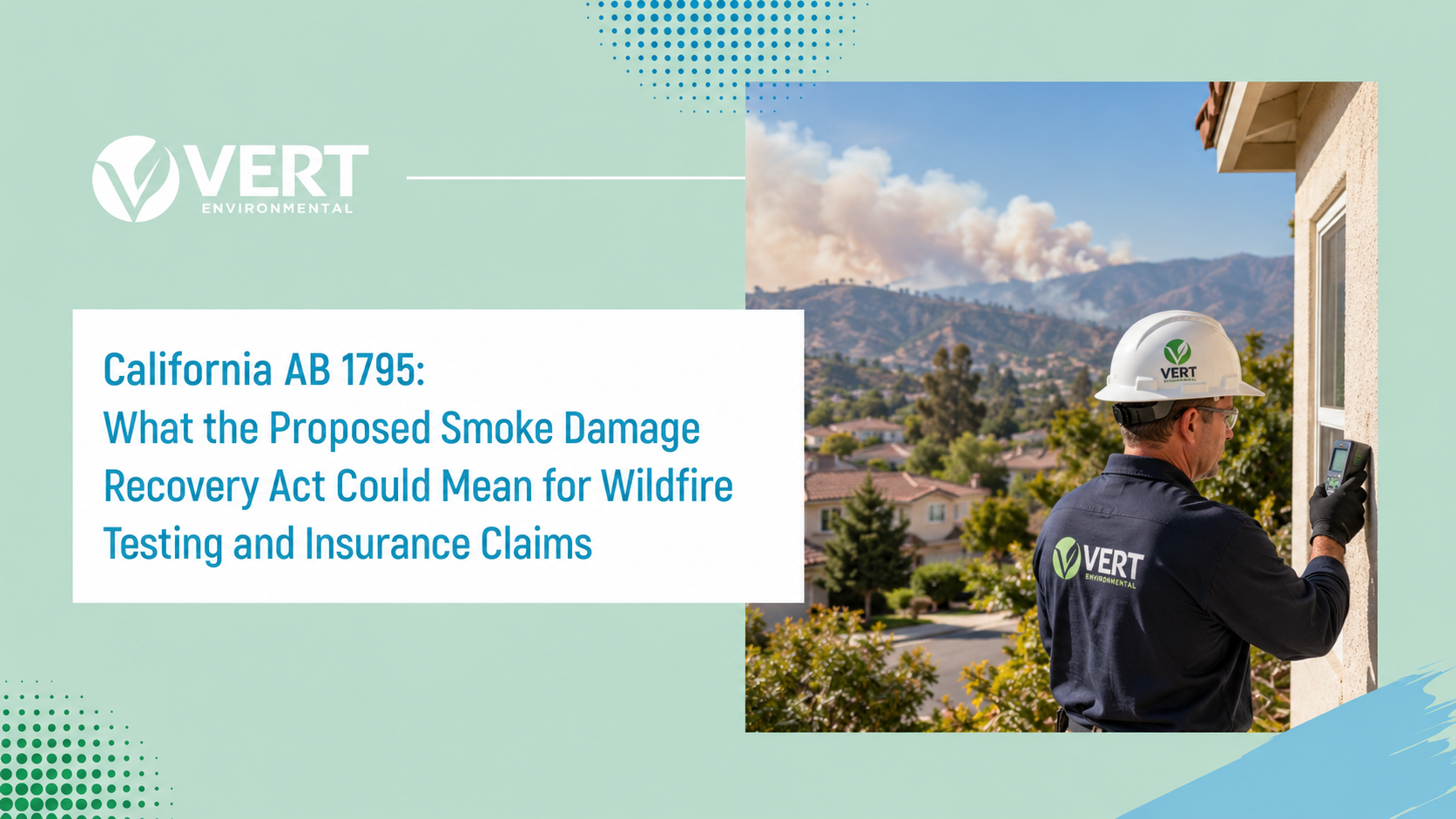
| wildfire smoke damage testing California |
Wildfire damage does not always end when the flames are extinguished.
A home can remain standing and still be affected by smoke, soot, ash, char, and other combustion byproducts. These materials can enter through doors, windows, ventilation systems, and other openings before settling onto surfaces, contents, HVAC components, and building materials. Wildfire smoke damage testing in California can help property owners document whether smoke, soot, ash, and other combustion residues may remain after a wildfire.
For California homeowners, insurers, restoration professionals, and property managers, one of the most difficult questions after a wildfire has historically been simple:
How do you determine whether a smoke-affected home has actually been restored to a condition that is safe to occupy?
California has now taken a major step toward creating a more consistent answer.
On September 15, 2026, Governor Gavin Newsom signed AB 1795, the Smoke Damage Recovery Act, into law. The legislation creates requirements related to smoke-damage claims, testing and sampling, restoration, inspections, and clearance of residential properties after qualifying wildfires. AB 1642, signed the same day, establishes the companion framework for developing science-based contamination standards.
For property owners and insurance professionals, that makes objective environmental testing an increasingly important part of post-wildfire assessment and recovery.
Source: California Department of Insurance — September 15, 2026 press release
What Is the California Smoke Damage Recovery Act?
AB 1795 is California legislation focused on residential properties affected by wildfire smoke. The California Smoke Damage Recovery Act establishes new requirements for evaluating and handling qualifying wildfire smoke-damage claims involving residential properties.
The law addresses a problem that became particularly visible after recent California wildfires: homes that did not burn could still contain smoke, ash, soot, char, combustion byproducts, and other contaminants, while property owners and insurers lacked one consistent statewide framework for evaluating that contamination.
AB 1795 creates a rebuttable presumption that when wildfire smoke, ash, soot, char, or combustion byproducts are present in a surviving residential property within a defined wildfire impact zone, the smoke damage resulted from that wildfire. The law defines a wildfire impact zone based on ZIP Codes located wholly or partially within the fire perimeter.
The law also establishes insurance-claim requirements involving testing, inspections, restoration, and clearance for occupancy.
Source: California Department of Insurance
What Changed When AB 1795 Became Law?
The law creates several requirements that can directly affect the way smoke-damage claims are investigated and documented.
For covered residential smoke-damage claims within a wildfire impact zone, AB 1795 provides that insurers are responsible for necessary sampling and testing required to restore a damaged property to its pre-loss condition and clear it for human occupancy, subject to the policy’s terms and provisions.
The law also requires an insurer that chooses to inspect a smoke-damaged property to do so as soon as practicable and generally no later than 30 calendar days after notice of the claim, or after access becomes available when government restrictions delay entry. It also addresses Additional Living Expense coverage, restoration estimates, payment timelines, professional qualifications, and a policyholder’s ability to choose the restoration contractor.
The California Department of Insurance summarizes the law as establishing standards for investigating, testing, and restoring smoke-damaged homes and requiring insurers to cover necessary testing and sampling for qualifying claims.
Source: California Department of Insurance
Important Implementation Detail
The law was signed in September 2026, but not every technical smoke-contamination standard exists yet.
AB 1642 directs the California Department of Toxic Substances Control to develop regulations for lead and asbestos testing, remediation, and restoration by December 31, 2028. It also directs the California Air Resources Board to develop guidance for indoor-air contaminants from residential wildfire smoke damage. Additional guidance covering other contaminants is scheduled later. Until the new lead and asbestos standards are adopted, AB 1642 specifies interim standards for those hazards.
That distinction matters: the law has been enacted, while portions of the technical framework will continue to be developed.
Source: AB 1642 bill summary / enacted framework
Why Wildfire Smoke Damage Testing California Matters Even When a Home Is Still Standing
A home does not need to burn to experience wildfire-related contamination.
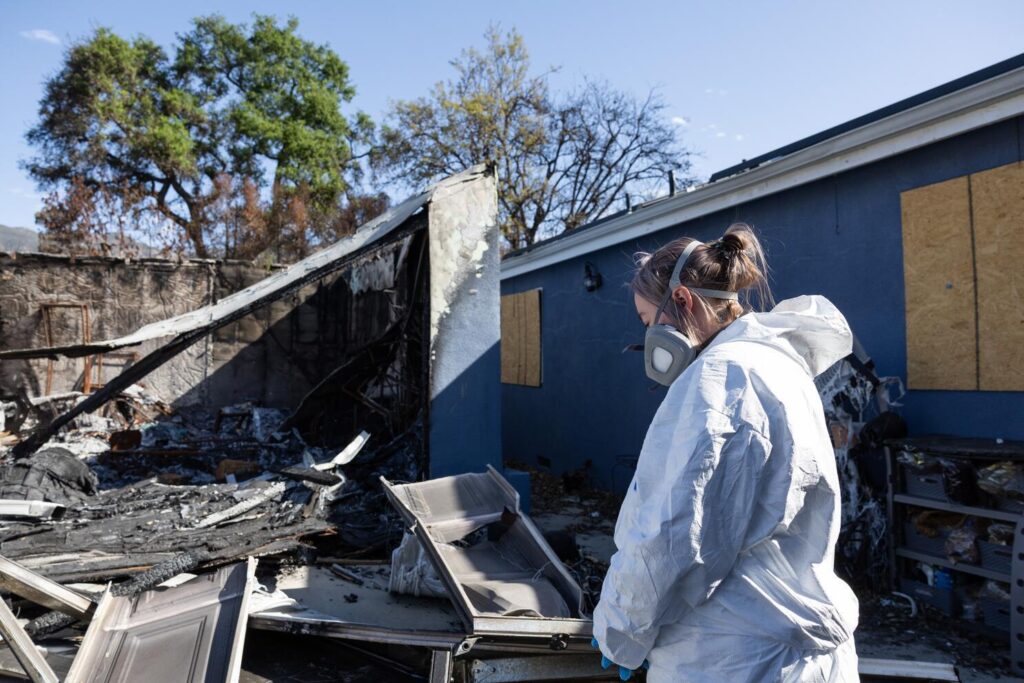
Smoke can move considerable distances and enter buildings through ventilation systems, doors, windows, cracks, and other openings. Once indoors, smoke-related particles and residues can settle onto floors, walls, furnishings, contents, HVAC components, and other materials.
California’s enacted legislation specifically recognizes smoke, ash, soot, char, combustion byproducts, chemicals, and contaminants as potential components of wildfire smoke damage.
A visual inspection alone may not fully define where contamination is present or what type of material is involved.
Professional environmental testing can help answer questions such as:
- Is fire or smoke residue present?
- Which rooms or building systems appear affected?
- Are additional contaminants appropriate to evaluate?
- Is contamination present in HVAC systems or less-visible areas?
- What information should be documented before cleanup?
- Is post-remediation verification appropriate?
Internal link: VERT Smoke & Fire Residue Testing
What Contaminants Can Remain After Wildfire Smoke Exposure?
Every wildfire is different.
The composition of residue depends on what burned, including vegetation, homes, vehicles, electronics, batteries, paints, furnishings, plastics, roofing materials, and other building products.
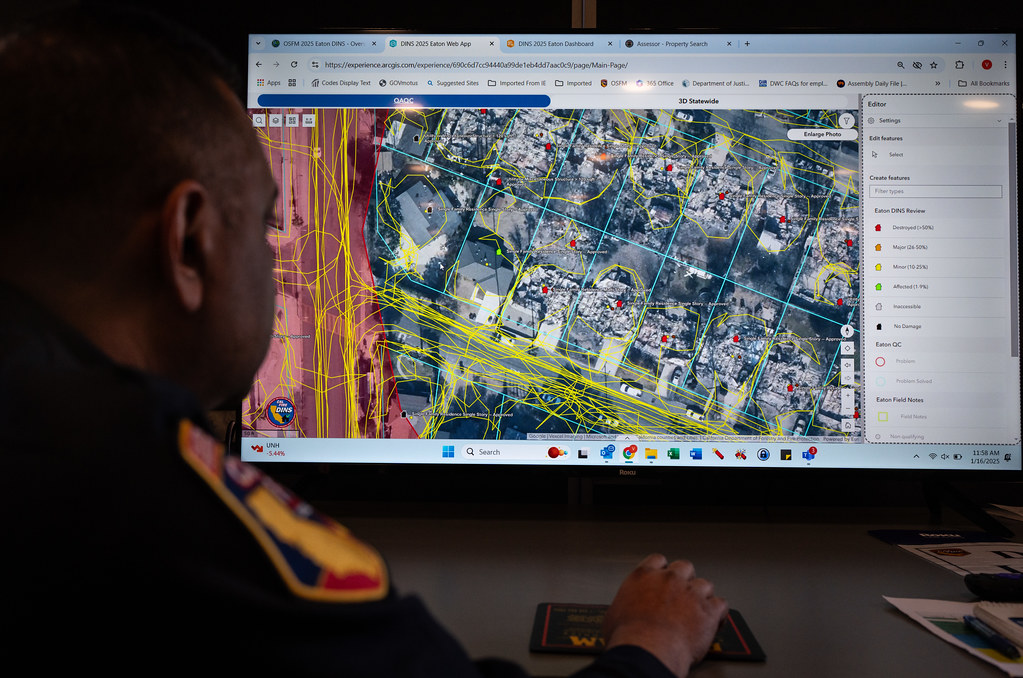
Depending on site conditions and the investigation objective, post-fire environmental testing may evaluate:
Soot, ash and char residue
Combustion particles can settle on surfaces and contents or migrate into connected building areas.
Lead and other heavy metals
Burned structures, paints, electronics, vehicles, and other materials can contribute metal contamination.
Asbestos
When older asbestos-containing building materials are damaged or disturbed by fire, impact, cleanup, or demolition, asbestos assessment may be appropriate.
Volatile Organic Compounds, or VOCs
Burned synthetic materials, furnishings, plastics, coatings, and other products can release chemical compounds.
Indoor particulate contamination
Fine particles can enter buildings and potentially move through HVAC systems.
Other combustion byproducts
The appropriate analysis should be based on the materials involved, location, fire conditions, and goals of the investigation.
VERT’s existing smoke and fire testing services evaluate fire-related residues and can include soot and char, VOCs, heavy metals, asbestos where appropriate, HVAC contamination, and post-remediation verification.
VERT Smoke & Fire Residue Testing
When Should You Consider Professional Smoke Damage Testing?
Wildfire smoke damage testing in California may be appropriate when a home has been exposed to significant wildfire smoke, even when there is no direct flame damage. Wildfire smoke damage testing California property owners request can help document conditions when smoke, soot, or ash exposure is uncertain.
Consider an environmental assessment when there is visible ash or residue, persistent smoke odor, suspected HVAC contamination, nearby structural burning, an insurance dispute over the extent of damage, uncertainty about cleanup scope, or a need to verify conditions after remediation.
Testing can be especially useful before cleanup begins, because cleaning can alter or remove conditions that may be relevant to documenting the original extent of contamination.
The goal is not to test everything automatically. The goal is to establish a sampling plan based on the property, fire event, observed conditions, exposure history, and questions that need to be answered.
What Does Professional Smoke Damage Testing Look Like?
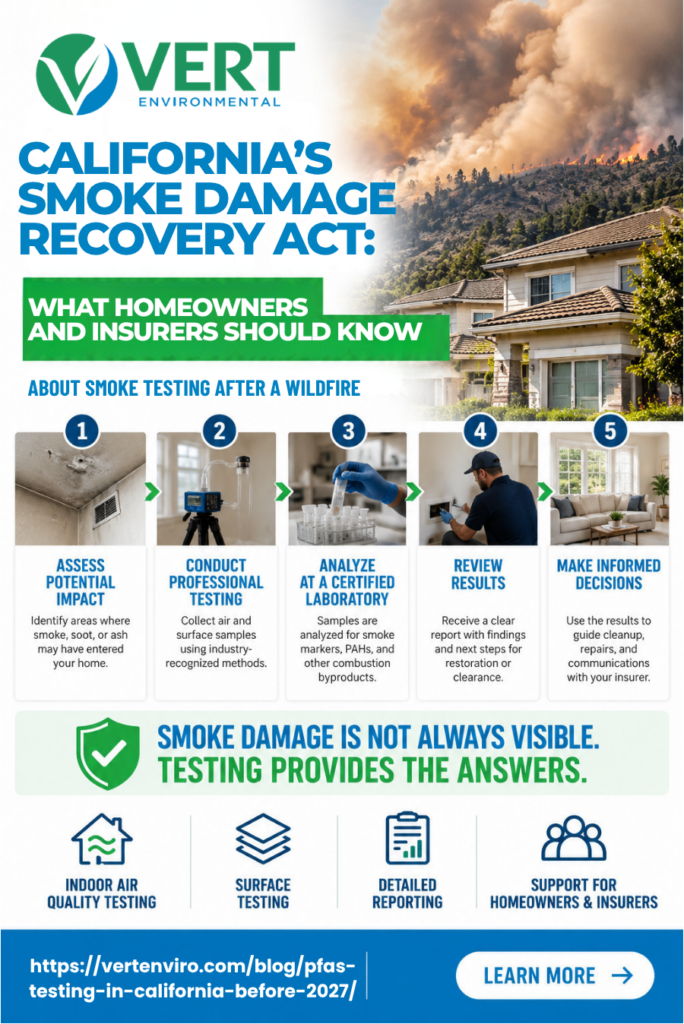
A post-wildfire environmental assessment generally begins with the property, not with a laboratory sample.
1. Document Conditions
The investigator reviews the property, fire history, reported smoke exposure, visible residue, odors, HVAC configuration, affected areas, and the purpose of the investigation. Photos and site observations can help establish a record of conditions before cleanup or restoration changes the property.
2. Develop a Sampling Strategy
Samples should be selected based on the investigation objective rather than collected randomly. Depending on the property, this may include surface samples, air samples, material samples, HVAC-related samples, or testing for specific contaminants.
3. Laboratory Analysis
Samples are submitted for appropriate laboratory analysis. The analytical method should match the material and contaminant being investigated.
4. Interpret and Document the Findings
Results should be evaluated together with site observations, sampling locations, property history, applicable standards or guidance, and the investigation’s objective. A written report can then document the findings and help inform the next stage of restoration.
How Can Smoke Testing Support an Insurance Claim?
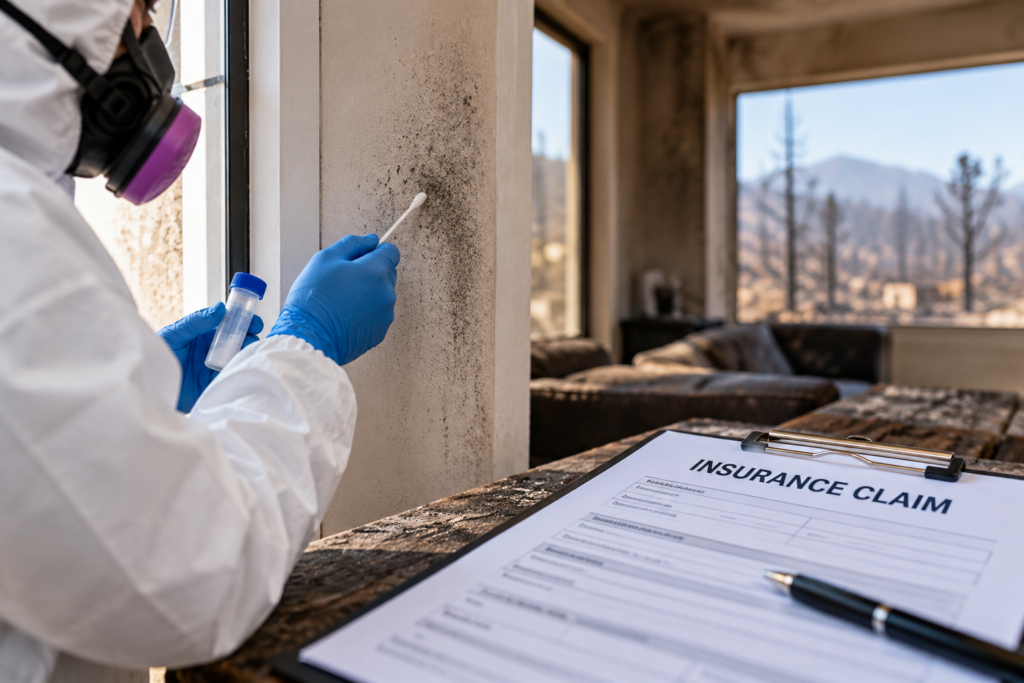
Environmental testing does not determine insurance coverage. Coverage is governed by the policy and applicable law. Wildfire smoke damage testing in California can provide objective environmental data that may help document physical conditions at the property.
Documentation from wildfire smoke damage testing in California can provide objective information about conditions observed after a wildfire.
Testing can, however, provide objective evidence about physical conditions at the property.
That documentation can help homeowners, adjusters, restoration professionals, and insurers evaluate:
- Whether residue or contamination was identified
- Where samples were collected
- What the laboratory detected
- Which areas may warrant further evaluation
- Whether additional remediation or cleaning may be appropriate
- Whether post-remediation verification is needed
AB 1795 now specifically addresses necessary sampling and testing for covered smoke-damage claims within wildfire impact zones and requires insurers to cover qualifying testing needed to restore the property and clear it for occupancy, subject to the policy.
This makes clear, well-documented testing particularly relevant to the post-wildfire claims process.
Source: California Department of Insurance
Why Independent Environmental Testing Matters
The company evaluating contamination should be able to focus on one question:
What do the conditions and data show?
Independent third-party environmental testing separates the assessment from the company performing remediation. For wildfire smoke damage testing, California property owners should look for an assessment based on site conditions, exposure history, and the specific questions the investigation needs to answer.
VERT Environmental is a testing company and does not have a remediation conflict of interest. That allows the investigation, sampling strategy, laboratory data, and reporting to remain focused on documenting environmental conditions rather than selling cleanup work.
For homeowners, insurers, contractors, attorneys, and property professionals, independent data can provide a clearer basis for deciding what happens next.
What Should California Homeowners Do After Wildfire Smoke Exposure?
If your property may have been affected by wildfire smoke, start by documenting conditions before making major changes whenever it is safe to do so.
Photograph visible residue and affected areas. Preserve relevant insurance communications. Note persistent odors, HVAC concerns, or areas where ash entered. Avoid unnecessary disturbance of suspect ash or damaged building materials.
If contamination is uncertain or the property is part of an insurance claim, consider having the property professionally evaluated before extensive cleaning or restoration begins.
For properties already remediated, post-remediation verification may also help determine whether the areas evaluated meet the applicable project criteria.
Need Clear Answers After Wildfire Smoke Exposure?
Smoke damage is not always visible, and the scope of contamination can vary significantly from one property to another.
VERT Environmental provides independent wildfire smoke damage testing in California to help homeowners, insurers, property managers, restoration professionals, and other stakeholders document conditions and make informed restoration decisions.
Professional wildfire smoke damage testing in California can help property owners clarify conditions before restoration decisions are made.

Related Articles

HVAC Mold Testing: 5 Warning Signs Your AC May Be Hiding Mold
Environmental Testing Before Demolition: 5 Must-Know Tests Before Remodeling