Back-to-School Indoor Air Quality: What Schools and Childcare Facilities Should Check After Summer
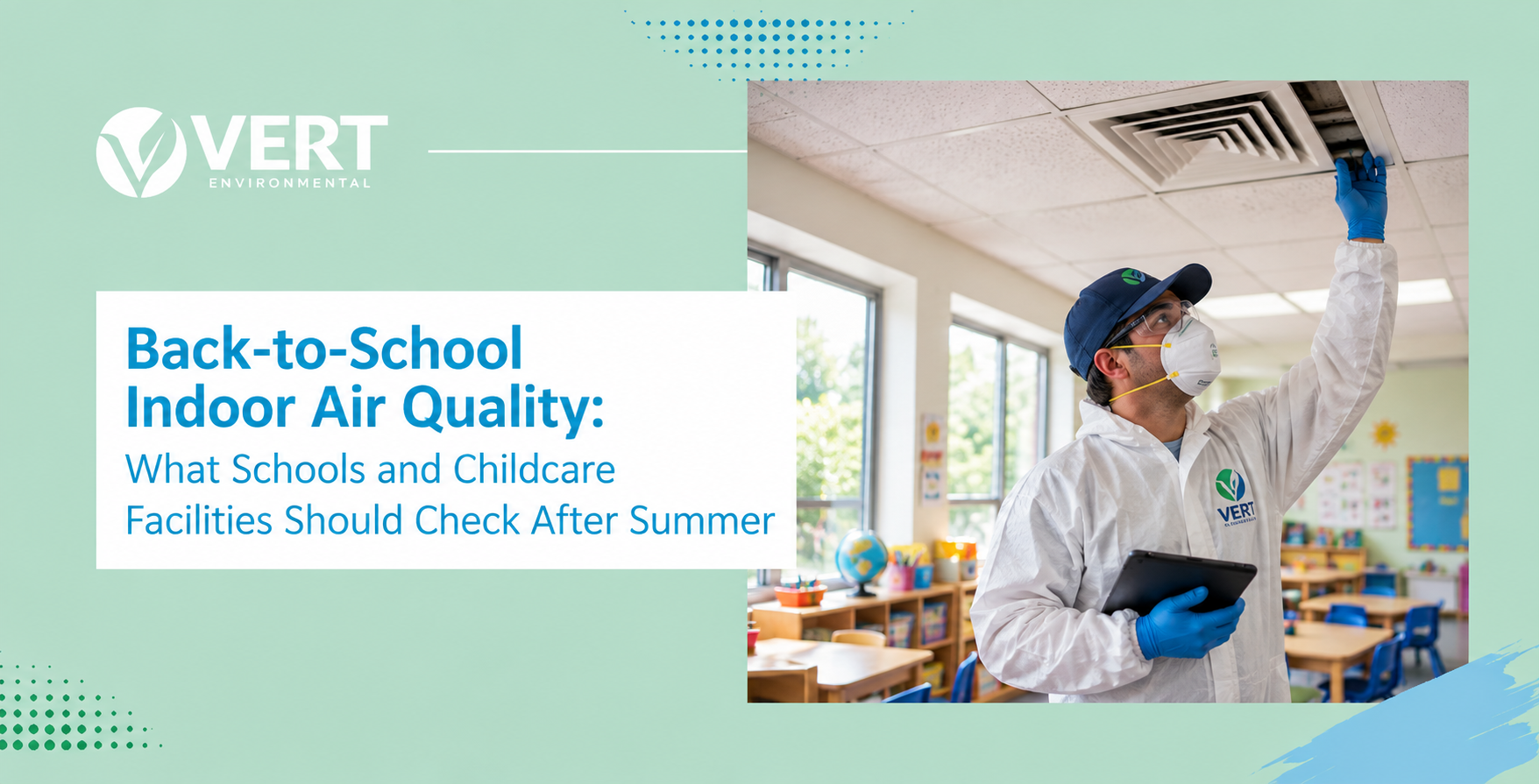
School indoor air quality testing in California can be an important consideration when classrooms reopen after summer. While the building may look exactly as it did in June, the indoor environment may not be the same.
During summer break, HVAC systems may operate on reduced schedules. Plumbing leaks can go unnoticed. Carpets may be cleaned, rooms repainted, floors replaced, furniture installed, or repair projects completed while buildings are lightly occupied.
School indoor air quality testing can help identify potential concerns with ventilation, moisture, mold, dust, VOCs, and wildfire smoke before students and staff return.
In California, wildfire smoke may also affect buildings during periods when classrooms are closed.
That makes the weeks before students and staff return a valuable time to look beyond clean desks and polished floors and ask:
Is the building ready from an indoor air quality perspective?
EPA school guidance specifically notes that summer shutdowns can contribute to moisture and mold problems when cooling and moisture control are reduced, and recommends preventive HVAC and moisture management. California’s Department of Public Health also maintains school ventilation, filtration, IAQ, and wildfire-smoke guidance for TK-12 facilities.
Here is what schools and childcare facilities should review before full occupancy returns.
1. Check HVAC Systems Before Full Occupancy
The HVAC system is one of the first places to start.
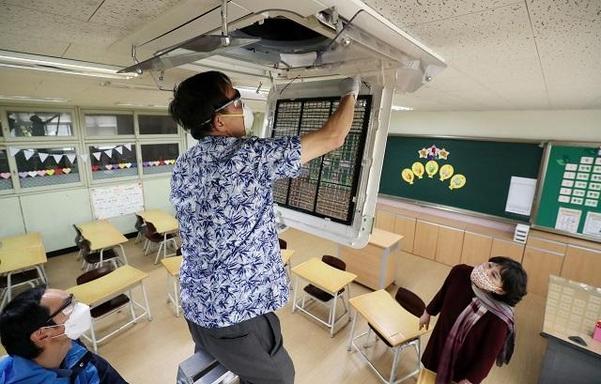
After weeks or months of reduced occupancy, inspect filters, air intakes, supply vents, return vents, condensate pans, drains, and accessible system components.
Look for clogged or improperly installed filters, standing water, unusual odors, debris around outdoor-air intakes, obstructed vents, or signs that the system has not been operating as intended.
EPA’s school IAQ framework recommends routine HVAC inspections, regular filter changes, properly draining condensate pans, clean air-supply diffusers and return registers, and appropriate outdoor-air ventilation.
The objective is not simply to turn the air conditioning back on the morning students arrive.
Allowing facilities teams time to identify airflow, filtration, moisture, and mechanical concerns before full occupancy makes it easier to address problems without disrupting classrooms.
2. Look for Moisture, Leaks, and Mold Warning Signs
A small leak that begins during summer can remain unnoticed for weeks.
Inspect ceilings, walls, windows, plumbing areas, restrooms, flooring, storage rooms, portable classrooms, and other locations vulnerable to water intrusion.
Look and smell for:
- Water staining
- Damp building materials
- Peeling or bubbling finishes
- Musty or unusual odors
- Visible microbial growth
- Condensation
- Standing water
- Evidence of plumbing, roof, or window leaks
EPA notes that roof and plumbing leaks, condensation, excess humidity, and delayed maintenance are common contributors to moisture problems in school buildings. Controlling moisture is the primary strategy for controlling indoor mold growth.
Visible growth is not the only reason to investigate.
A persistent musty odor, past water loss, or suspicious staining may justify a closer moisture and mold assessment even when obvious growth is not present.
3. Review Areas Renovated or Repaired During Summer
Summer is often when schools schedule painting, flooring replacement, classroom remodeling, roof work, new furniture installation, maintenance projects, and other improvements.
Those projects can also change indoor air conditions.
New paints, adhesives, flooring, furniture, sealants, and manufactured materials may release volatile organic compounds. Construction and renovation can generate dust and particulates. Work involving older building materials may also require evaluation for regulated hazards before disturbance.
EPA specifically recommends protecting ventilation systems during renovation, controlling pollutant sources, considering material emissions, and providing appropriate ventilation during and after installation.
Before reopening renovated areas, facilities teams should review what work was completed, which materials were installed, whether dust control was used, whether ventilation was maintained, and whether lingering odors or occupant concerns remain.
Where concerns exist, targeted VOC monitoring, particulate evaluation, mold assessment, or other environmental testing may be appropriate.
4. Evaluate New Materials, Dust, and VOC Concerns
A room does not need to smell strongly for indoor air quality to deserve attention.
Potential indoor pollutants in schools include VOCs, dust, mold, cleaning-product emissions, particles generated during construction, and contaminants associated with certain building materials. EPA’s school preventive-maintenance guidance identifies mold, dust, VOCs, lead, asbestos, pesticides, and other pollutants as issues that school IAQ programs may need to address.
This is especially relevant when several projects happen at once.
A classroom may receive new flooring, fresh paint, cabinetry, furniture, and cleaning products within a short period. Individually, each project may seem routine. Together, they can change the indoor environment.
If strong odors, irritation complaints, visible dust, or ventilation concerns remain after a summer project, investigate the source instead of simply masking the odor.
5. Prepare for Wildfire Smoke
Back-to-school season overlaps with wildfire season in many parts of California.
Even when a school is not located inside a burn area, outdoor smoke can affect indoor conditions through doors, windows, ventilation systems, and outdoor-air intakes.
Facilities teams should review filtration, building openings, HVAC operation, and the school’s response plan for periods of poor outdoor air quality.
California CDPH provides specific TK-12 ventilation, filtration, and wildfire-smoke resources, while CDC notes that children require particular protection during wildfire smoke events, especially those with asthma or other chronic conditions.
A school that experienced significant smoke exposure during summer may also need to consider whether residue entered classrooms or HVAC systems.
The response should be based on actual conditions rather than assuming that a closed building was completely protected from outdoor smoke.
6. Pay Attention to Occupant Concerns
Teachers, staff, students, and parents can provide important clues about building conditions.
Once people begin returning, track whether concerns are associated with one room, one wing, one HVAC zone, or the entire building.
Examples may include recurring odors, stuffiness, humidity, visible staining, headaches, respiratory irritation, or reports that ventilation feels inadequate.
A complaint does not automatically identify the source.
An odor could come from moisture, a drain, new materials, cleaning chemicals, outdoor pollution, HVAC conditions, or another source entirely.
That is why documentation matters.
Record when the concern occurs, where it occurs, how long it lasts, whether it changes when the HVAC system operates, and whether multiple people report the same condition.
That information can help narrow the investigation and determine whether targeted Professional Mold Testing makes sense.
When Should a School Consider Professional Indoor Air Quality Testing?
Schools may benefit from school indoor air quality testing when concerns involve moisture, mold, ventilation, renovations, wildfire smoke, or unexplained indoor environmental issues. A targeted school indoor air quality testing assessment can help identify which environmental factors require further evaluation.
School indoor air quality testing is particularly useful when a building has persistent odors, moisture concerns, suspected mold, wildfire smoke exposure, or ventilation problems.
Not every building needs comprehensive laboratory testing every time it reopens.
School indoor air quality testing may be appropriate when a building has persistent odors, repeated occupant complaints, suspected mold or moisture damage, summer construction, wildfire smoke exposure, visible dust or residue, unusual humidity, or HVAC concerns.
Examples include persistent odors, repeated occupant complaints, suspected mold or moisture damage, summer construction, wildfire smoke exposure, visible dust or residue, unusual humidity, HVAC concerns, or unexplained conditions that persist after routine maintenance.
The investigation should begin by defining the question.
Instead of simply asking, “Is the air safe?” a more useful question may be:
Is there evidence of elevated VOCs in the renovated classroom?
Did a roof leak create conditions that warrant mold testing?
Did wildfire smoke affect this HVAC zone?
Are particulate levels elevated in recently renovated areas?
A clearly defined objective helps determine what measurements or samples are actually appropriate.
What Can School Indoor Air Quality Testing Include?
School indoor air quality testing is a broad assessment rather than one single test.
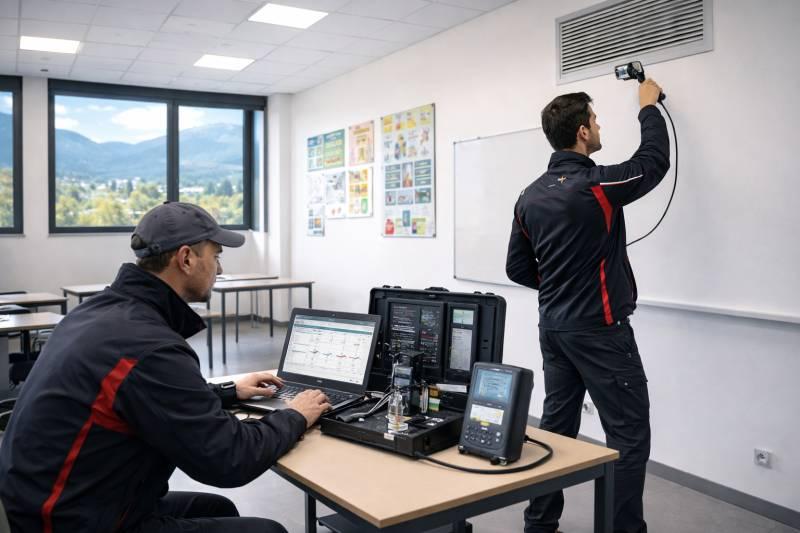
Depending on the concern, an assessment may include a visual inspection, moisture evaluation, HVAC observations, field measurements, air sampling, or laboratory analysis.
VERT Environmental’s IAQ assessments can evaluate pollutants such as mold spores, volatile organic compounds, and particulate matter, with the testing approach tailored to the property and concern.
Possible areas of evaluation may include:
- Mold spores
- VOCs
- Airborne particulate matter
- Moisture conditions
- Temperature and relative humidity
- Suspected smoke-related contamination
- Specific environmental contaminants based on the building history
Targeted school indoor air quality testing can help schools identify potential IAQ concerns before students and staff return and determine whether additional evaluation may be needed.
IAQ Testing vs. Mold Testing: What’s the Difference?
Mold testing is one type of environmental investigation.
Indoor air quality testing is broader.
If the primary concern is a roof leak, visible microbial growth, moisture damage, or a musty odor, the investigation may focus on mold and moisture.
If the concern follows painting, flooring installation, furniture replacement, or renovation, the assessment may focus more heavily on VOCs, particulates, and ventilation.
If a wildfire affected outdoor air during summer, the investigation may instead focus on smoke infiltration and fire-related particulate or residue concerns.
The first step is identifying the problem or potential source. Testing should follow from that question.
A professional school indoor air quality testing approach starts by identifying the specific concern, whether related to moisture, ventilation, mold, wildfire smoke, or indoor pollutants.
Should Schools Test Indoor Air Every Year?
There is no single testing schedule that is appropriate for every school and every environmental concern.
A more effective approach is to maintain an ongoing IAQ management program built around preventive maintenance, routine building inspections, HVAC care, moisture control, documentation, and targeted testing when conditions warrant it.
EPA’s IAQ Tools for Schools framework emphasizes ongoing assessment, planning, preventive HVAC maintenance, moisture and mold control, cleaning, and pollutant-source management rather than relying on one annual test as the entire IAQ program.
Schools should also reassess conditions after events that can materially change the indoor environment, such as water damage, major renovation, prolonged HVAC shutdowns, unusual occupant complaints, or wildfire smoke exposure.
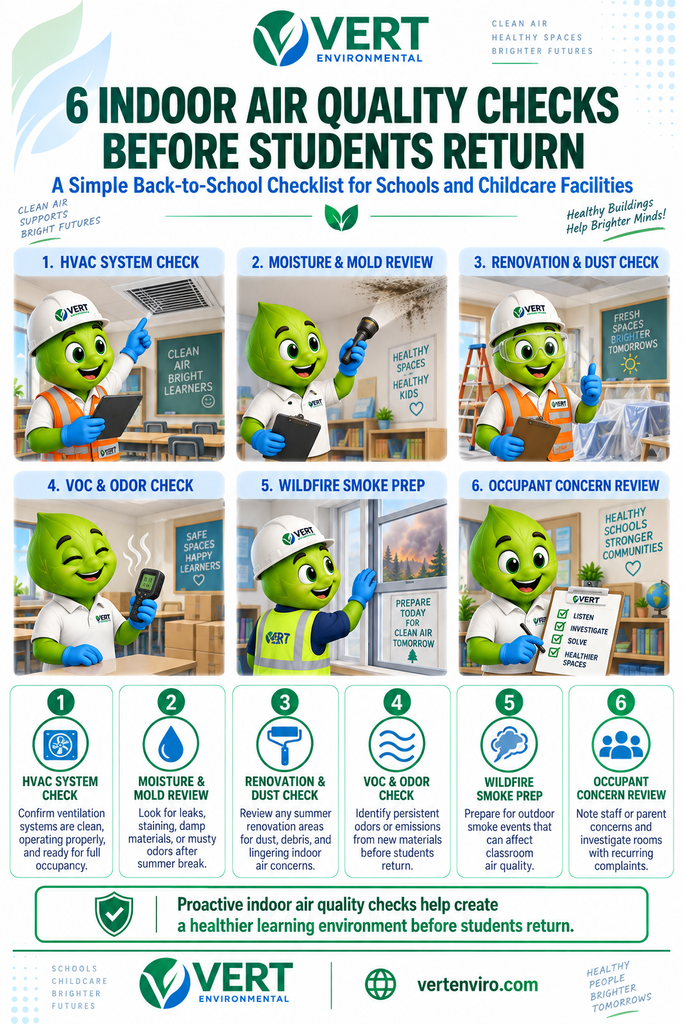
A Simple Back-to-School Indoor Air Quality Checklist
This checklist can help schools determine when school indoor air quality testing may be useful after summer maintenance, renovations, weather events, or extended building closures.
1. HVAC Systems
Check filters, vents, drains, air intakes, and airflow before full occupancy returns.
2. Moisture & Leaks
Inspect ceilings, plumbing areas, windows, walls, and damp materials for hidden water issues.
3. Mold Warning Signs
Look for musty odors, staining, visible growth, or signs of previous water damage.
4. Renovation Dust & VOCs
Review recently painted or renovated areas for dust, odors, and new-material emissions.
5. Wildfire Smoke
Consider whether outdoor smoke may have entered classrooms through doors, windows, or HVAC systems.
6. Occupant Concerns
Track room-specific complaints such as odors, discomfort, poor ventilation, or recurring symptoms.
Targeted school indoor air quality testing can help identify IAQ concerns before students and staff return. This type of assessment allows schools to better understand potential environmental factors affecting classrooms and shared spaces.
VERT Environmental provides school indoor air quality testing services designed to help schools better understand indoor environmental conditions. A targeted assessment can help identify concerns related to moisture, ventilation, mold, VOCs, and other indoor pollutants.
When performed by qualified professionals, school indoor air quality testing can provide valuable information about classroom conditions and help guide appropriate next steps.
Ready to secure your building’s safety and ensure total compliance? Contact Vert Environmental today to schedule your professional Indoor Air Quality Testing

Related Articles

HVAC Mold Testing: 5 Warning Signs Your AC May Be Hiding Mold
Environmental Testing Before Demolition: 5 Must-Know Tests Before Remodeling