
HVAC Mold Testing: 5 Warning Signs Your AC May Be Hiding Mold
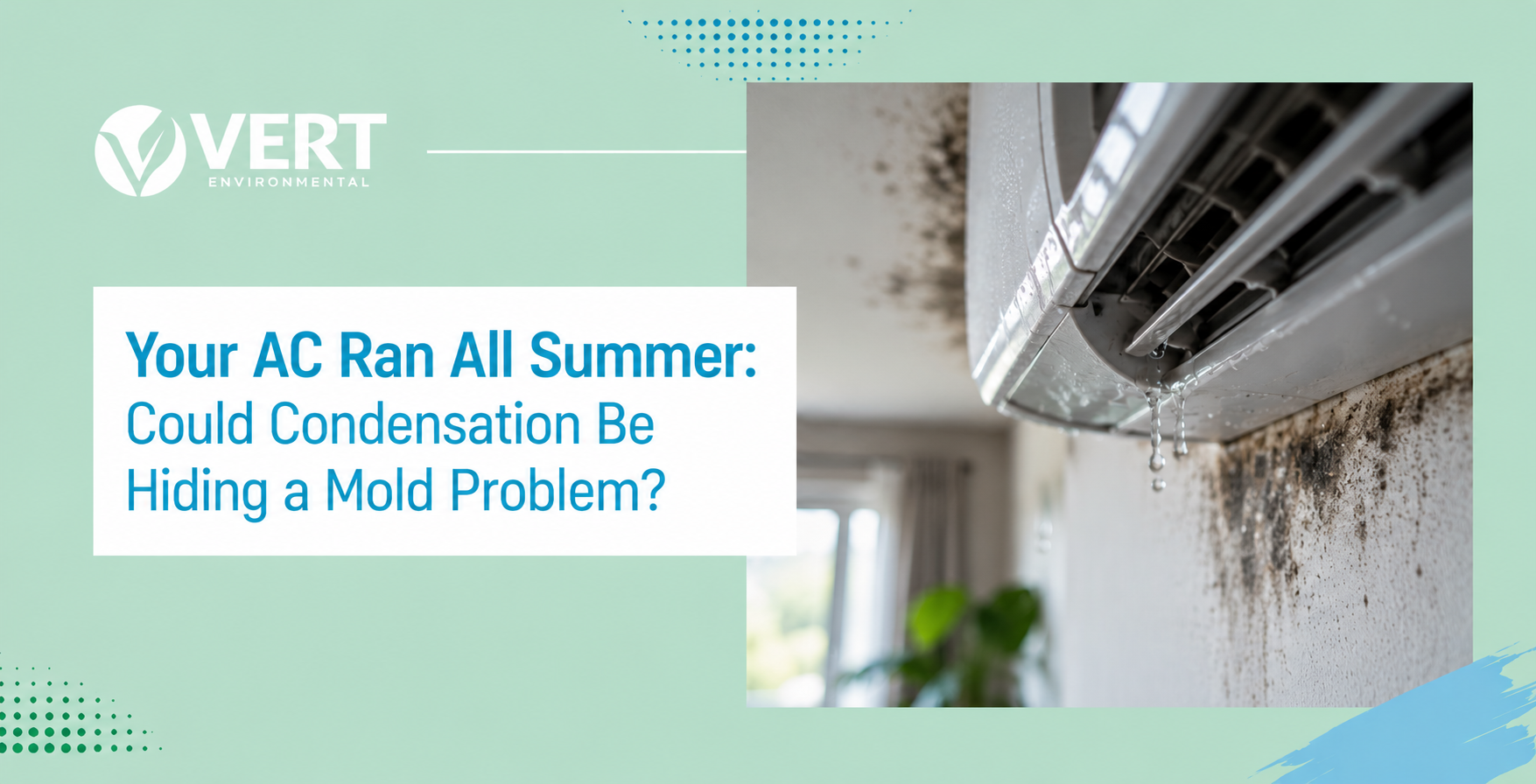
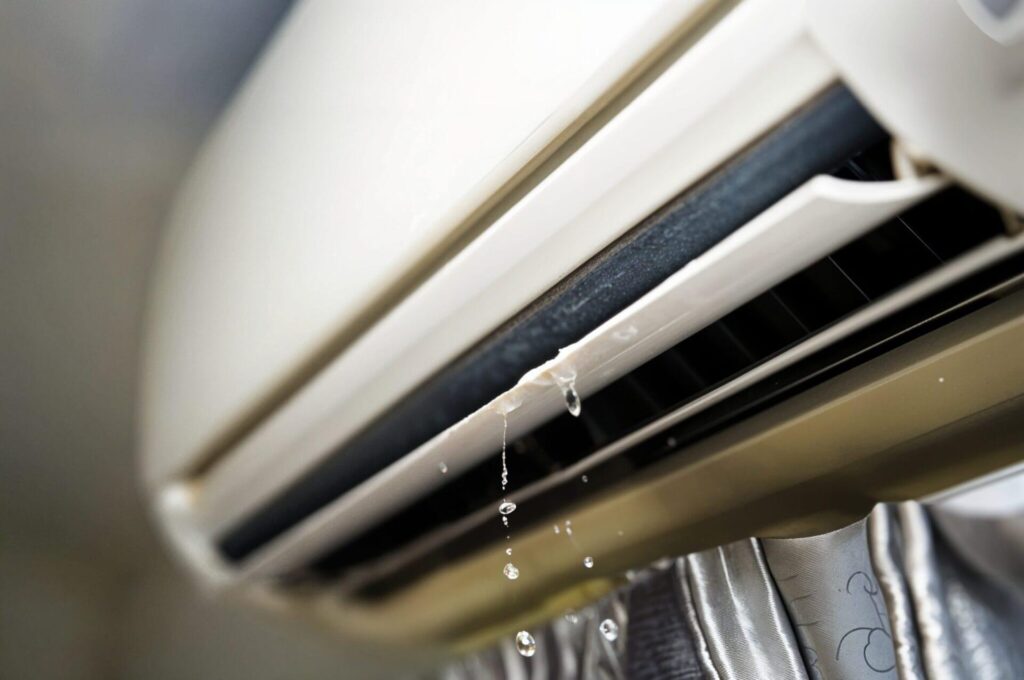
After months of running your air conditioner through warm weather, HVAC mold testing may come to mind if you notice musty odors, recurring moisture, staining near vents, or unexplained dampness around the system. Air conditioning does not automatically cause mold, but condensation, drainage problems, high humidity, wet insulation, and other HVAC moisture issues can create conditions that support mold growth.
And sometimes the first sign is not visible mold.
It is a smell.
A water stain.
A damp vent.
Or an AC system that seems to leave one area of the home unusually humid.
How Can AC Condensation Contribute to Mold?
Air-conditioning systems are designed to cool indoor air and remove moisture.
As warm air passes across cold cooling coils, water can condense and collect in a drain pan before leaving the system through a condensate line.
Under normal conditions, that moisture is controlled.
Problems can develop when water does not drain as intended.
EPA identifies cooling coils and condensate pans as areas that deserve particular attention because standing water or debris can contribute to moisture contamination. EPA also recommends keeping AC drip pans clean and drain lines unobstructed.
Air conditioning systems naturally create condensation as they remove heat and humidity from indoor air. Under normal conditions, that moisture is collected and drained away. Problems begin when drainage, insulation, airflow, or maintenance issues prevent moisture from being properly controlled.
Potential problems include:
- Clogged condensate lines
- Improperly draining pans
- Standing water near cooling coils
- Wet insulation
- Condensation on poorly insulated ducts
- Air leaks around ductwork
- Excess indoor humidity
- Oversized HVAC equipment that does not remove moisture effectively
- Previous water damage around the air handler
Where moisture persists, mold may eventually develop on susceptible materials.
Signs You May Have Mold From AC Condensation
Mold from AC condensation is not always obvious.
Pay attention to patterns that appear around the HVAC system or after extended periods of cooling.
Possible warning signs include:
1. Musty Odors When the AC Turns On
A musty smell does not prove mold is present, but recurring odors associated with HVAC operation warrant investigation.
2. Condensation on Vents or Ducts
Condensation suggests humid air is reaching a surface cold enough for moisture to form.
EPA notes that condensation or high relative humidity can indicate conditions favorable for mold growth.
3. Water Stains Around Supply Vents
Discoloration around vents may be related to condensation, air leakage, roof or plumbing issues, or other moisture sources.
The source should be identified rather than assuming the stain is merely cosmetic.
4. A Full or Overflowing Condensate Pan
Standing water around the cooling system deserves prompt attention.
Drain pans should direct water toward an unobstructed drain.
5. Wet or Damaged Insulation
Insulation around ductwork or HVAC components can become damp when condensation forms repeatedly.
Porous materials that remain wet can support microbial growth.
6. Rooms That Stay Humid Despite Running the AC
EPA generally recommends keeping indoor relative humidity below 60 percent and ideally around 30 to 50 percent where practical. Persistent indoor humidity can increase the likelihood of mold growth.
When Does HVAC Mold Testing Make Sense?
HVAC mold testing may be useful when moisture problems, condensation issues, or recurring odors suggest that further investigation is needed.
Not every musty smell requires air sampling.
An environmental investigation should begin by identifying the moisture problem.
HVAC mold testing may be useful when:
- Mold is suspected but cannot be located
- Musty odors continue without an obvious source
- There has been recurring HVAC condensation
- Water has entered walls or ceilings near ductwork
- The HVAC system was involved in a previous water event
- Occupants have repeated concerns associated with a specific area
- Documentation is needed before or after remediation
- The extent of suspected contamination is unclear
EPA advises that routine sampling is generally unnecessary when visible mold is already present. In those situations, locating and correcting the water source and addressing the affected material are typically the priority.
Testing should answer a defined question rather than simply produce a spore count.
HVAC Mold Testing Is Different From an HVAC Service Call
An HVAC technician and an environmental testing professional may look at the same system from different perspectives.
An HVAC contractor typically focuses on whether the mechanical system is operating properly.
That may include:
- Refrigerant performance
- Drainage
- Equipment sizing
- Coil condition
- Airflow
- Mechanical failures
An environmental assessment may focus on:
- Moisture patterns
- Evidence of microbial growth
- Building materials surrounding the system
- Indoor humidity
- Conditions in wall or ceiling cavities
- Air or surface sampling when appropriate
- Whether additional investigation is needed
In some cases, both professionals may be needed.
Professional HVAC mold testing focuses on identifying moisture-related concerns and helping determine appropriate next steps based on the building conditions.
Fixing the HVAC problem without addressing moisture-damaged materials may leave part of the problem unresolved.
Cleaning a mold-affected area without correcting the source of condensation may allow the problem to return.
Can Mold Grow Inside HVAC Ducts?
It can, particularly when moisture reaches dust, insulation, or other materials within the HVAC system.
EPA notes that an HVAC system involved in an identified moisture problem may itself become a site of mold growth and may potentially distribute mold through a building.
This does not mean every duct needs routine mold testing or cleaning.
The investigation should look for evidence of moisture.
Questions may include:
- Are ducts properly insulated?
- Is condensation forming on exterior duct surfaces?
- Has internal duct insulation become wet?
- Is there standing water near the cooling coil?
- Is the condensate drain working?
- Is visible growth present?
- Is there a persistent odor linked to HVAC operation?
EPA specifically recommends that wet or moldy internal duct insulation be removed and replaced because that material may not be effectively cleaned.
Your AC Ran All Summer. What Should You Check Now?
Late summer and early fall are useful times to look for moisture conditions that may have developed during heavy AC use.
Check:
The Condensate Drain
Make sure water is draining properly.
The Drain Pan
Look for standing water, debris, staining, or overflow.
Visible Ductwork
Watch for condensation, damaged insulation, or evidence of persistent dampness.
Areas Around Vents
Look for staining, deterioration, or repeated condensation.
Indoor Humidity
Persistent humidity may point to ventilation, equipment, moisture, or building-envelope issues.
Musty Odors
Do not simply mask recurring odors.
Try to determine when and where they occur.
Moisture Control Is the Key to Mold Prevention
Whether the moisture is coming from an air conditioner, roof, plumbing line, window, or humidity problem, the underlying principle is the same:
Control the moisture.
EPA emphasizes that moisture control is the key to mold control and recommends drying wet materials quickly, generally within 24 to 48 hours where possible.
That means a long-term solution should address both:
1. The moisture source
and
2. Any building materials that were affected
Simply wiping away visible growth without solving the condensation or drainage problem may not prevent recurrence.
HVAC Mold Testing After Water or Condensation Problems
HVAC mold testing may be appropriate when moisture problems continue after an AC leak, condensation issue, or water event. A professional evaluation can help determine whether visible concerns, odors, or moisture conditions require further investigation.
Bullets:
- Persistent musty odors
- Repeated condensation around vents
- Water stains near HVAC components
- Damp insulation
- Unknown moisture sources
- Occupant concerns
When to Call an Environmental Testing Professional
Consider a professional evaluation when:
- The moisture source is unclear
- Suspected mold is concealed
- Multiple rooms are affected
- HVAC operation appears connected to recurring odors
- There has been significant or repeated water damage
- Building materials have remained wet
- Property management documentation is needed
- Remediation verification is required
A qualified assessment can help determine whether sampling is appropriate and what type of investigation will provide useful information.
Concerned About AC Condensation? Investigate the Moisture First
If you are concerned about AC condensation, noticing musty odors, or concerned about possible hidden mold around your HVAC system, contact VERT Environmental for professional HVAC mold testing and learn more about our Mold Testing Services.
Your air conditioner working hard all summer does not automatically mean you have mold.
But condensation problems should not be ignored.
Standing water, wet insulation, poorly draining condensate pans, high indoor humidity, and repeated moisture around ductwork can create conditions where microbial growth becomes possible.
HVAC mold testing may be one part of the investigation when the source or extent of a suspected moisture problem is unclear. A professional HVAC mold testing evaluation can help identify whether further testing or corrective action is appropriate.
The most important step is identifying why moisture is present and correcting that condition before it becomes a recurring building problem.
Seeing moisture, noticing musty odors, or concerned about possible hidden mold around your HVAC system? Contact VERT Environmental…

Related Articles

Environmental Testing Before Demolition: 5 Must-Know Tests Before Remodeling
Back-to-School Indoor Air Quality: What Schools and Childcare Facilities Should Check After Summer