Environmental Testing Before Demolition: 5 Must-Know Tests Before Remodeling
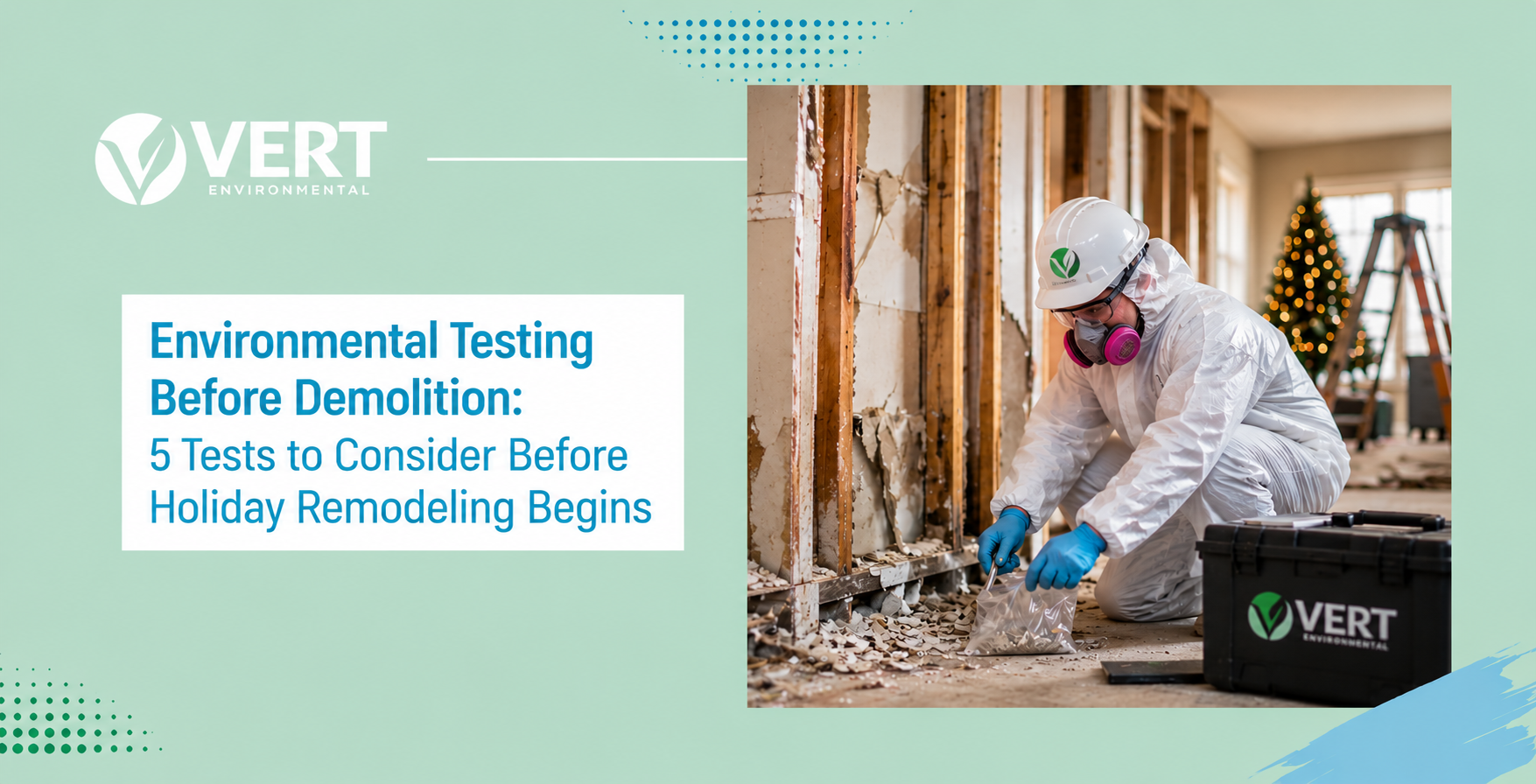
Environmental testing before demolition allows contractors and property owners to identify potential hazards before materials are disturbed and construction timelines are affected.
A holiday remodeling deadline can create pressure to move quickly.
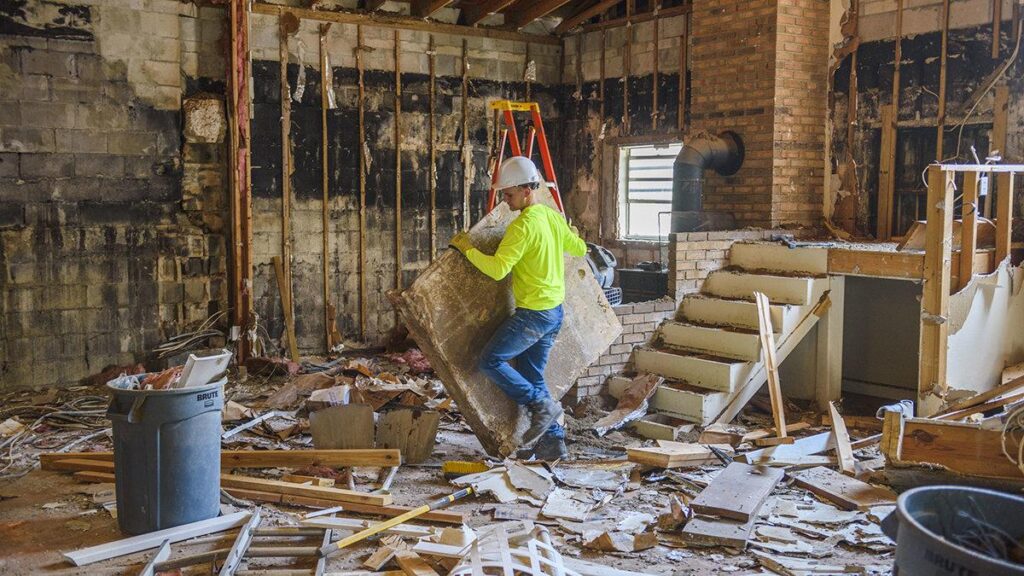
The contractor is booked. Materials are ordered. Tenants, employees, or homeowners are expecting the project to finish before family arrives, businesses enter their busiest season, or year-end schedules become even tighter.
Then demolition starts and someone discovers an unknown ceiling texture, old floor adhesive, suspicious wall material, water damage, or a coating that was never evaluated.
Work stops.
Environmental testing before demolition can help identify potential hazards before the project becomes a scheduling problem. A proactive assessment gives contractors and property owners better information before materials are disturbed..
For California contractors, property managers, and building owners, the goal is not to order every environmental test available. The goal is to understand what materials will be disturbed, what hazards may reasonably be present, and what testing or exposure assessment makes sense before work begins.
VERT Environmental provides independent environmental testing services for residential, commercial, and construction projects throughout California.
Planning environmental testing before demolition helps teams understand what materials may be present and what evaluations may be needed before work begins.
Quick Answer: What Should Be Checked Before Demolition?
Depending on the age of the building, materials involved, site history, occupancy, and scope of work, five areas commonly worth evaluating are:
1. Asbestos-containing materials
2. Lead-containing paint or coatings
3. Mold and hidden moisture
4. Respirable crystalline silica exposure
5. Indoor air quality, dust, and airborne contaminants
Not every test is required on every project. Some are driven by specific regulatory requirements. Others provide baseline information or help clarify unknown conditions before an occupied property is disturbed.
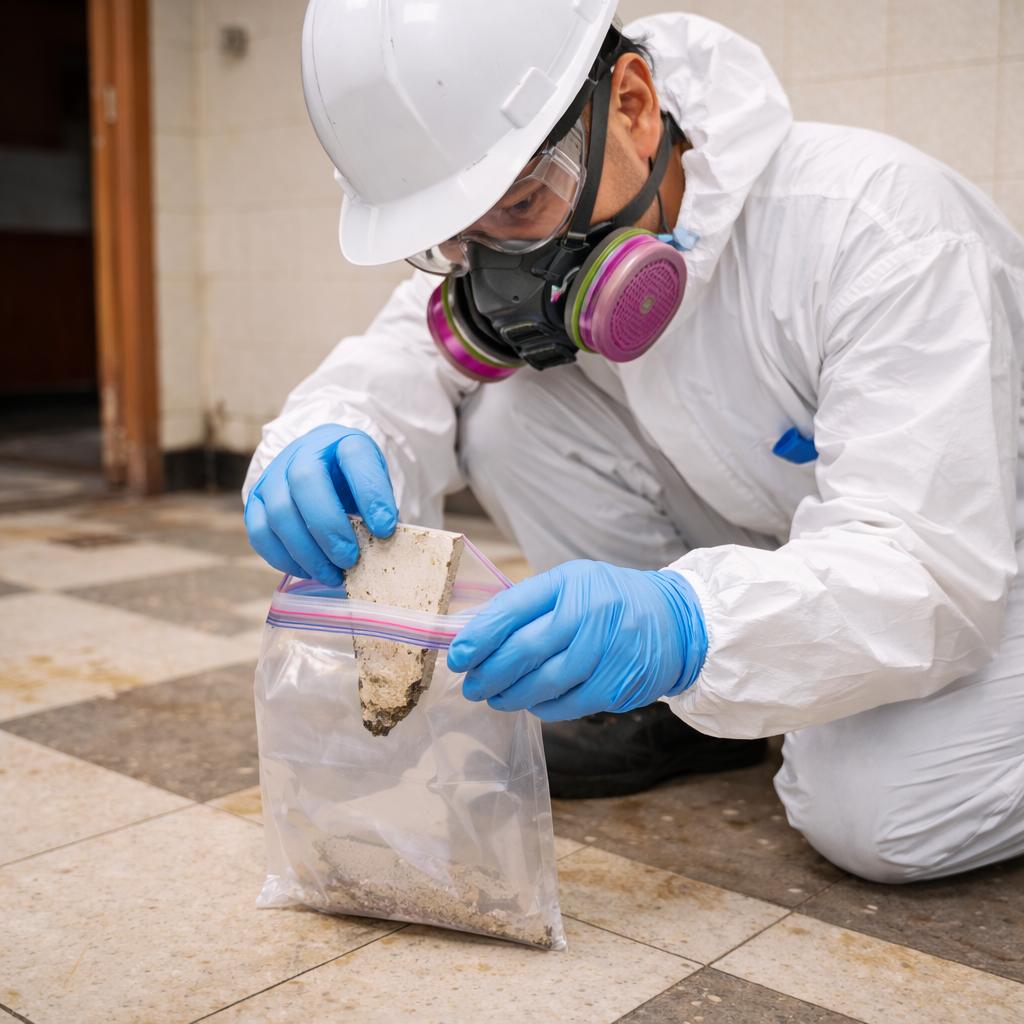
Environmental testing before demolition can help identify potential hazards before building materials are disturbed.
1. Asbestos Testing Before Demolition
If demolition will disturb existing building materials, asbestos should be addressed early in project planning. Potential asbestos-containing materials may include:
- Flooring and adhesives
- Pipe insulation
- Thermal-system insulation
- Roofing products
- Textured coatings
- Surfacing materials
- Fireproofing
- Wall systems
- Other suspect building materials
California and federal asbestos requirements can apply depending on the type of property, material, and scope of work. Because asbestos cannot reliably be identified by appearance alone, professional asbestos testing can help determine whether suspect materials contain asbestos before they are disturbed.
Why This Matters Before a Holiday Remodel
Finding suspect material after demolition begins can affect:
- Scheduling
- Worker access
- Containment requirements
- Disposal procedures
- Abatement planning
- The overall scope of work
Testing before disturbance gives the project team time to plan properly. It is much easier to adjust a construction schedule before demolition than after an unexpected material has already been disturbed.
VERT’s asbestos testing services include inspections, sampling, laboratory analysis, and reporting for residential and commercial properties.
Including environmental testing before demolition can help determine whether asbestos-containing materials require evaluation before construction activities begin.
2. Lead Testing for Painted and Coated Surfaces
Older painted surfaces should not automatically be treated as ordinary construction debris. Lead-containing coatings can create contaminated dust when they are:
- Sanded
- Cut
- Drilled
- Scraped
- Demolished
- Otherwise disturbed
This is particularly important in residential properties and child-occupied facilities built before 1978. Lead requirements vary based on the type of property, work being performed, and applicable federal, California, and local regulations.
Professional lead testing can help identify lead in paint, building materials, dust, soil, water, and other surfaces before project decisions are made.
Lead Testing Can Be Especially Important When Work Includes
- Window replacement
- Door replacement
- Wall removal
- Sanding or surface preparation
- Cabinet demolition
- Trim removal
- Exterior renovation
- Painted structural components
- Other work that disturbs older coatings
The age of the property is an important clue, but visual appearance alone cannot confirm whether a coating contains lead.
3. Mold and Moisture Testing Before Materials Are Opened
Demolition often reveals conditions that were hidden behind finished surfaces. A wall may look dry from the outside while moisture is trapped behind drywall. Flooring may conceal previous water intrusion. A cabinet or wall assembly may hide microbial growth caused by an old plumbing leak.
That is why a mold and moisture assessment can be useful when a remodeling project involves areas with:
- Past leaks
- Water staining
- Musty odors
- Previous flooding
- Roof or window intrusion
- Plumbing failures
- Visible microbial growth
- Persistent dampness
VERT’s mold assessments can include visual investigation, moisture evaluation, and laboratory-analyzed sampling when appropriate.
Why Evaluate Mold Before Demolition?
Demolishing a contaminated material without understanding the extent of an affected area can distribute dust and microbial material into adjacent spaces. A pre-work assessment can help define the areas of concern and provide clearer information for the contractor or remediation team before materials are removed.
This is particularly useful in occupied multifamily properties, commercial buildings, healthcare environments, schools, offices, and residential properties.
4. Silica Dust Testing and Exposure Assessment
Concrete, masonry, mortar, tile, stone, and similar materials can contain crystalline silica. Activities such as cutting, grinding, drilling, jackhammering, or demolishing these materials can generate respirable crystalline silica dust.
California’s construction silica requirements address occupational exposure to respirable crystalline silica. Depending on the work being performed, employers may use specified control methods or may need to conduct an exposure assessment.
This is an important distinction: Silica testing is not necessarily a simple pre-demolition bulk-material test. What often matters is understanding the task, controlling the dust, and evaluating employee exposure under actual work conditions.
VERT provides silica dust testing and air monitoring for construction and industrial environments.
Projects That May Create Silica Exposure Include
- Concrete demolition
- Tile cutting
- Masonry work
- Countertop fabrication or alteration
- Brick or block cutting
- Grinding concrete surfaces
- Drilling into silica-containing materials
For contractors, silica should be considered during job-hazard planning rather than only after visible dust appears.
5. Indoor Air Quality and Dust Baseline Testing
Environmental testing before demolition may also include indoor air quality or airborne particulate assessment. This type of evaluation can help identify potential concerns before renovation or demolition work begins. This can be particularly useful when construction occurs inside an occupied building.
Demolition can introduce or redistribute:
- Particulate matter
- Construction dust
- Volatile organic compounds
- Fibers
- Odors
- Other airborne contaminants
Pre-demolition environmental testing process: reviewing potential hazards, evaluating materials, and documenting conditions before renovation or construction work begins.
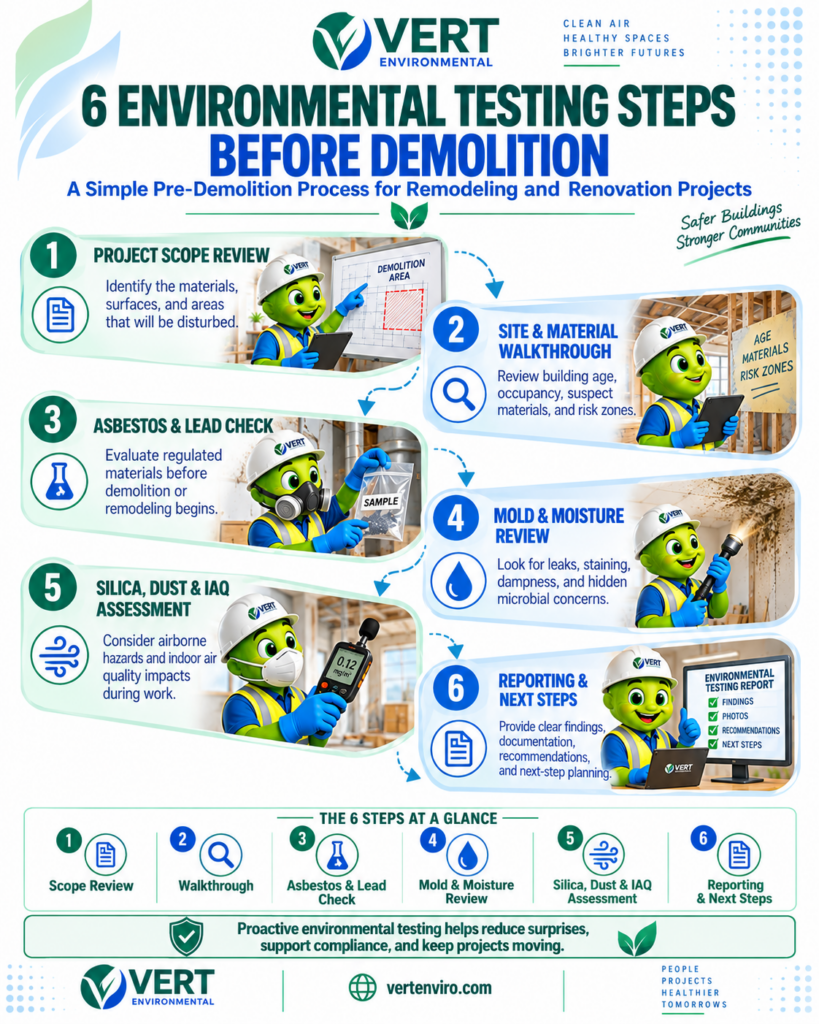
Each project may require a different combination of assessments depending on the materials involved, building history, and planned scope of work.
As part of environmental testing before demolition, a pre-construction indoor air quality assessment can help establish baseline conditions before work begins. VERT’s IAQ testing can evaluate pollutants and airborne contaminants using field assessment, sampling, laboratory analysis, and reporting.
That baseline may be valuable when tenants, occupants, employees, neighboring businesses, building management, or other stakeholders need documentation of conditions before and after construction.
When a Baseline May Be Worth Considering
- Multifamily buildings
- Office buildings
- Schools
- Healthcare environments
- Commercial facilities
- High-value residential properties
- Projects where occupants have previously raised air-quality concerns
Unlike certain asbestos or lead requirements, a general IAQ baseline is not automatically mandated for every remodeling project. Its value is primarily in documentation, risk management, investigation, and verification when conditions warrant it.
Why Environmental Testing Before Demolition Can Protect the Schedule
Environmental testing is sometimes viewed as one more item to fit into a construction schedule. In reality, finding an unknown hazard during demolition can create a much larger scheduling problem.
Without Pre-Work Evaluation
Demolition begins. A suspect material or environmental condition is discovered. The project may then need to pause while:
- Materials are evaluated
- Samples are collected
- Laboratory results are returned
- The demolition scope is revised
- Appropriate contractors or controls are arranged
With Environmental Testing Before Demolition
Many of those questions can be addressed while the project is still in the planning stage. That can mean:
- Clearer scopes of work
- Better project sequencing
- Fewer unexpected discoveries
- Better documentation
- More informed scheduling
VERT offers more than one type of environmental testing service, which can be useful when a remodeling project has several potential areas of concern.
A Holiday Deadline Does Not Change Environmental Requirements
Year-end remodeling schedules can be tight. Property owners may want units ready before holiday guests arrive. Retail spaces may need renovations completed before seasonal traffic increases. Contractors may be balancing several projects before year-end.
But a compressed timeline does not eliminate environmental obligations. If the work involves regulated materials or occupational exposures, applicable requirements still need to be addressed. The better approach is to incorporate environmental due diligence before the demolition date is locked in.
Contractor Environmental Testing Checklist Before Demolition
☐ What materials will my crew disturb?
Identify drywall, texture, flooring, mastic, insulation, roofing, stucco, concrete, painted surfaces, and other building materials within the work area.
☐ Has required asbestos testing been completed?
Do not rely solely on the age or appearance of a material to determine whether asbestos may be present. Consider professional asbestos testing before suspect materials are disturbed.
☐ Will painted or coated surfaces be disturbed?
Determine whether lead testing or other lead-related compliance requirements apply to the project and the work being performed.
☐ Is there water damage, visible microbial growth, or an unusual odor?
Evaluate whether moisture investigation, mold testing, or indoor air quality testing may be appropriate.
☐ Will the work create dust or other potential employee exposures?
Consider whether exposure assessment or monitoring is required for hazards such as respirable crystalline silica, lead, or asbestos.
☐ Are there concealed or unknown materials?
If demolition exposes material that was not previously evaluated, stop disturbing that material until the project team determines whether additional testing is appropriate.
☐ Does the testing match the actual scope of work?
Make sure the materials and areas being tested correspond with what the crew will actually disturb.
What Happens if Testing Finds a Hazard?
A positive test result does not necessarily mean the entire renovation must be abandoned. It means the project team has information that should be incorporated into the work plan.
Depending on the finding, the next step may involve:
- Adjusting the demolition scope
- Using appropriately qualified or certified contractors
- Establishing regulated or controlled work areas
- Selecting appropriate engineering controls
- Performing remediation or abatement before general demolition
- Conducting exposure monitoring
- Completing clearance or verification testing after specialized work
Independent environmental testing helps separate the question “What is present?” from “Who should remove or remediate it?” That distinction can help building owners and contractors make decisions based on independent environmental data.
Plan the Testing Before the Demolition Crew Arrives
Holiday remodeling should not begin with a surprise hidden behind the first wall. Before demolition begins, identify what materials will be disturbed and determine whether environmental testing is appropriate for the project.
Environmental testing before demolition helps teams understand potential hazards before demolition activities create delays or unexpected discoveries.
VERT Environmental provides independent third-party testing for asbestos, lead, mold and moisture, silica dust, indoor air quality, and other environmental concerns throughout California.
Testing before disturbance can provide the project team with clearer information, stronger documentation, and a more defined path forward.
This is why environmental testing before demolition is often considered during renovation planning, especially when older materials or unknown building conditions may be present.
Planning a renovation or demolition project? Request environmental testing from VERT Environmental before materials are disturbed.
You can also review VERT’s California service areas to find environmental testing coverage near your project.
Professional environmental testing before demolition can provide valuable information for safer planning, documentation, and decision-making before renovation or demolition activities begin.
A proactive environmental testing before demolition strategy helps teams address potential concerns before work begins and supports safer project planning.
This article is intended for general informational purposes and does not constitute legal or regulatory advice. Environmental testing and compliance requirements vary by project type, location, materials, building use, and scope of work.

Related Articles

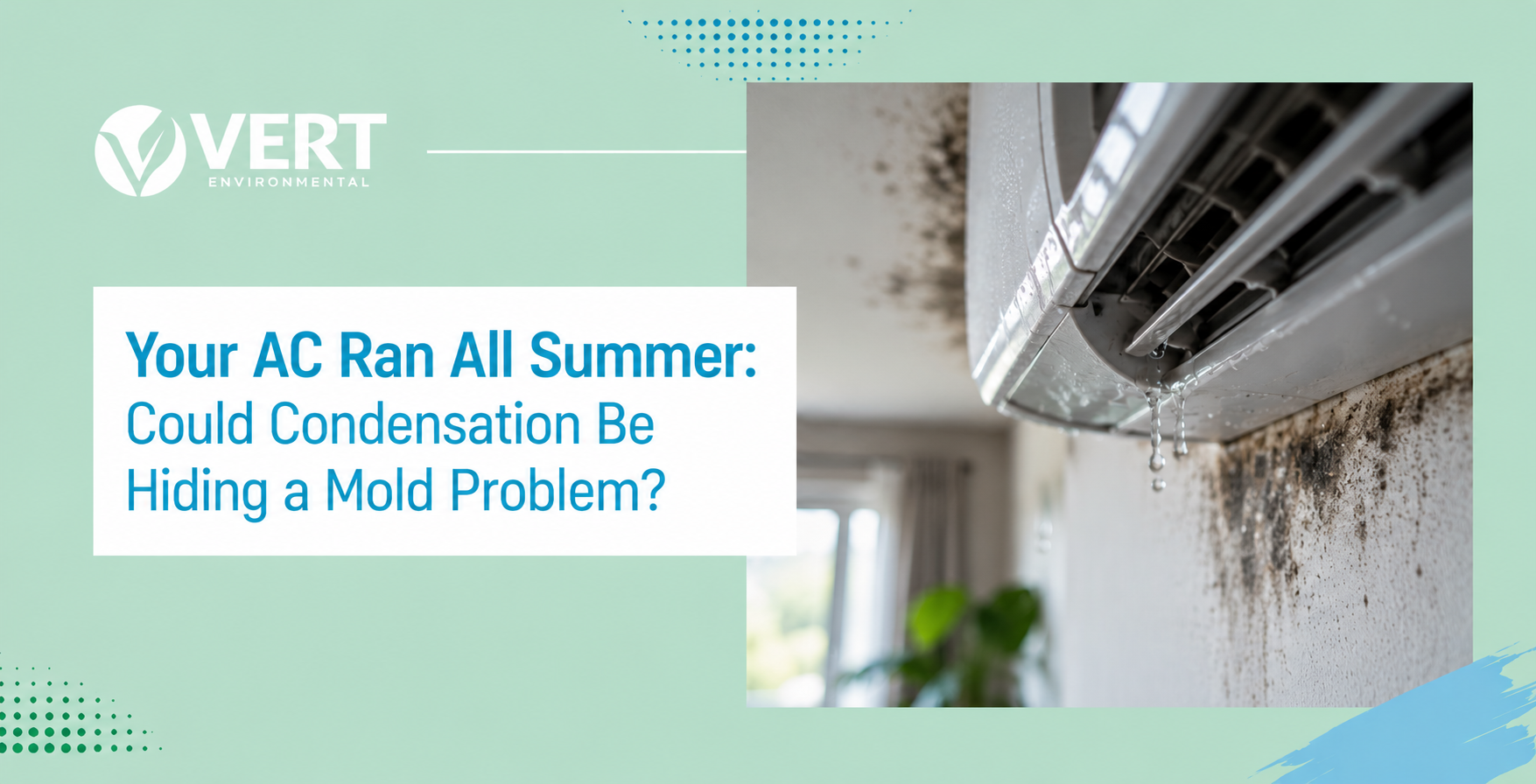
HVAC Mold Testing: 5 Warning Signs Your AC May Be Hiding Mold
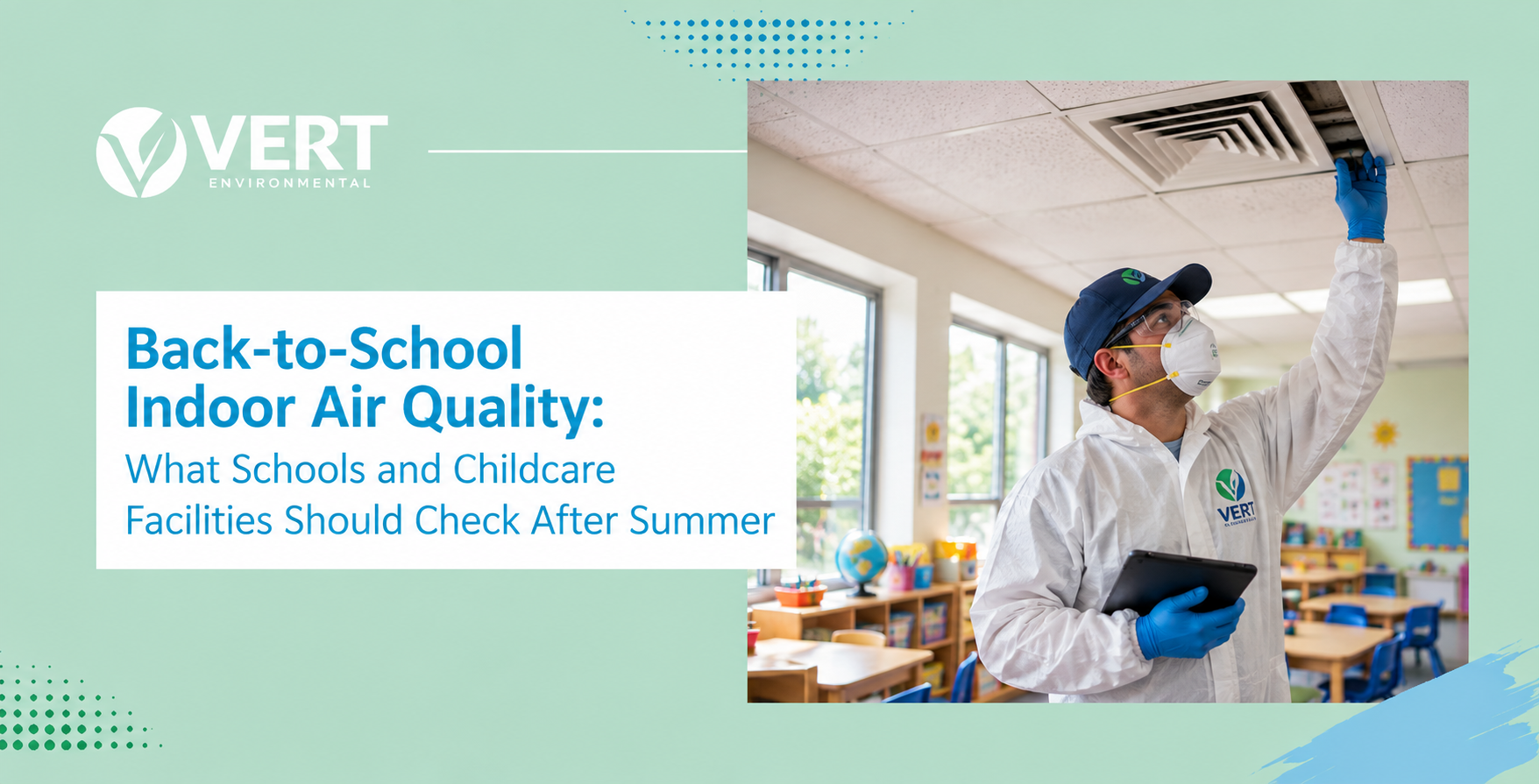
Back-to-School Indoor Air Quality: What Schools and Childcare Facilities Should Check After Summer