
PFAS Testing in California: What Property Managers and Building Owners Need to Know Before 2027
PFAS testing in California is receiving more attention as drinking-water monitoring requirements expand and public awareness of these persistent chemicals continues to grow.
For property managers and building owners, however, the regulatory picture can be confusing.
Does every California property need to test its water for PFAS before 2027? What happens if your building receives water from a municipal supplier? What if the property uses a private well? And if you decide to test independently, what type of testing should you request?
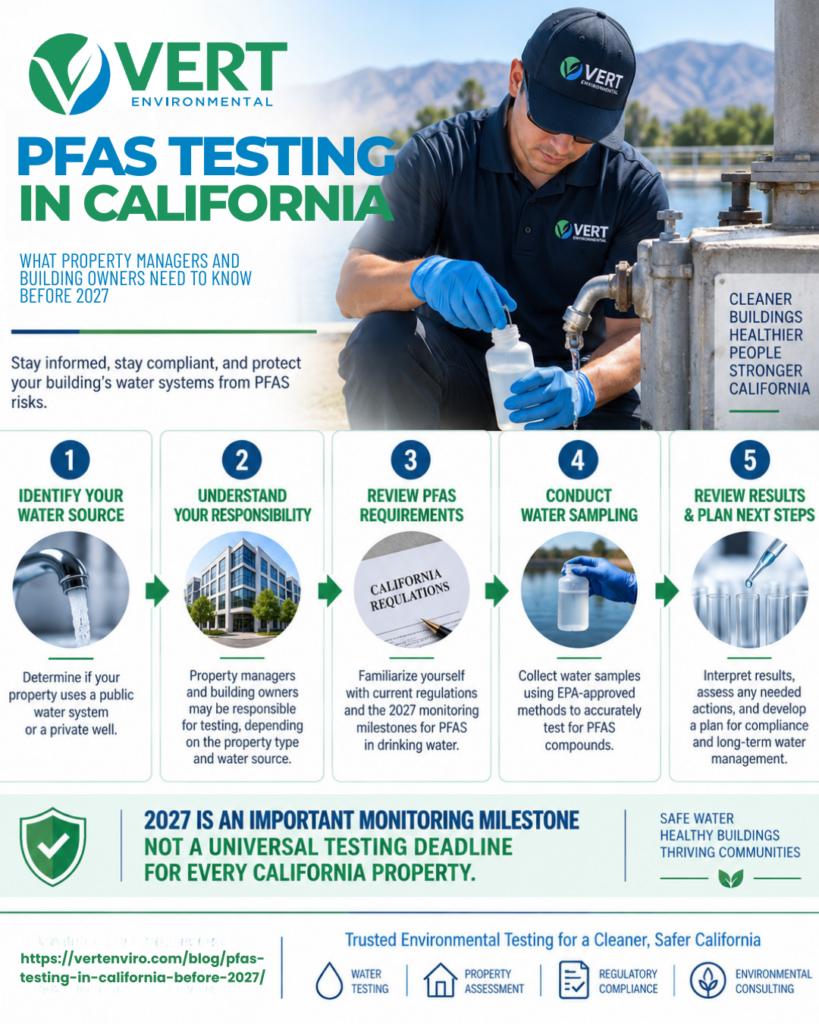
The short answer is that 2027 is an important monitoring milestone, but it is not a universal deadline requiring every California building owner to conduct PFAS testing.
Understanding how your property receives its water is the first step.
If you need building-specific information beyond what your water supplier provides, VERT Environmental offers independent water quality testing for residential and commercial properties throughout California.
Quick Answer: What Changes in 2027?
California and federal regulators have increased PFAS monitoring of drinking-water systems.
California’s Division of Drinking Water issued General Order DW-2025-0002-DDW in December 2025 requiring certain community water systems and nontransient noncommunity water systems to conduct initial PFAS monitoring.
At the federal level, EPA’s PFAS drinking-water regulations established an important initial monitoring milestone in 2027. Federal compliance requirements have also continued to develop through rulemaking.
For property owners, that means the key question is not simply “Do I need PFAS testing?” It is: “Who supplies this property’s drinking water, and what testing responsibilities apply to that system?”
What Are PFAS?
Per- and polyfluoroalkyl substances, commonly called PFAS, are a large group of synthetic chemicals that have been used for decades in industrial processes and consumer products because of their resistance to heat, oil, stains, grease, and water.
PFAS have been associated with products and applications such as water-resistant materials, certain industrial processes, stain-resistant coatings, and some firefighting foams.
Because many PFAS break down very slowly, they can persist in the environment and eventually reach groundwater or drinking-water sources. That persistence is one reason federal and California regulators have increased PFAS monitoring.
For property owners concerned about contaminants in a building’s drinking-water supply, professional water quality testing can provide laboratory data specific to the property or source being evaluated.
Why PFAS Testing in California Is Getting More Attention Before 2027
Property owners who begin PFAS testing in California early can better understand potential contamination concerns and prepare for changing regulatory requirements.
The regulatory landscape has changed quickly over the past several years. California has issued PFAS monitoring orders and developed notification and response levels for several PFAS compounds. The state has also continued evaluating PFAS drinking-water standards.
Meanwhile, public water systems subject to federal requirements are moving through monitoring and reporting phases. For a property manager or building owner, this can affect:
- Tenant and occupant questions about water quality
- Due diligence during acquisitions or property transfers
- Properties operating their own regulated water systems
- Properties served by private wells
- Facilities located near areas with known or suspected PFAS contamination
- Properties where previous water testing identified a potential concern
The goal should be to understand the property’s actual exposure pathway rather than assuming every building requires the same testing strategy.
VERT provides a range of independent environmental testing services that can help property owners evaluate water and other environmental concerns using third-party data.
Does Every Property Owner Need PFAS Testing Before 2027?
No. A property connected to a municipal public water system is usually receiving water from a supplier that is responsible for required public-water-system monitoring. Whether PFAS testing in California is appropriate for a property depends on its water source, available monitoring data, and whether building-specific information is needed.
Property managers should begin by identifying the property’s water provider and reviewing the provider’s available water-quality information, including its Consumer Confidence Report when applicable. Independent testing may still make sense when a property owner wants building-specific data or when there are site-specific concerns.
Properties Served by Municipal Water
If your apartment building, office, retail property, or commercial facility receives water from a municipal supplier, start with the water provider. Ask:
- Has the system completed PFAS monitoring?
- Were PFAS detected?
- What compounds were detected?
- What monitoring or treatment actions are underway?
- Are results available in the system’s water-quality reports?
Building-specific water testing can then be considered if additional verification or documentation is needed.
Properties With Private Wells
A private-well property requires a different approach. Domestic well owners are generally responsible for understanding and maintaining the quality of their own drinking-water source.
PFAS is not automatically included in every standard well-water panel, so owners concerned about PFAS should confirm specifically what compounds and analytical methods are included.
Buildings That Operate a Regulated Water System
Some campuses, workplaces, schools, healthcare facilities, institutions, or other properties may operate systems that fall under public-water-system requirements.
Those owners should determine whether the system is classified as a community or nontransient noncommunity water system and whether current California monitoring requirements apply. When necessary, confirm system-specific requirements directly with the California Division of Drinking Water.
When PFAS Testing in California May Make Sense for a Property
Even when independent testing is not automatically required, it may be useful for certain properties. Consider a building-specific PFAS assessment when:
- The property relies on groundwater or a private well
- The water supplier has reported PFAS detections
- The property is undergoing environmental due diligence
- There is a known contamination concern near the property’s water source
- Occupants have raised water-quality concerns
- A lender, insurer, purchaser, consultant, or other stakeholder requests environmental data
- Management wants a documented baseline of the property’s drinking-water quality
Testing should be based on the property’s water source, history, intended use of the results, and applicable regulatory requirements. Property managers can also review VERT’s service areas to see where environmental testing is currently available throughout California.
How Is PFAS Drinking Water Testing Performed?
PFAS testing in California requires appropriate sample collection and specialized laboratory analysis using recognized analytical methods. EPA-approved drinking-water methods include EPA Method 533 and EPA Method 537.1.
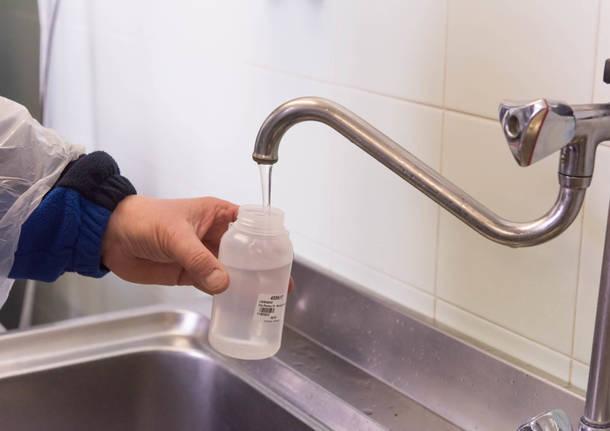
Sampling is important because PFAS analysis is not the same as collecting a routine water sample. Sampling materials, containers, handling procedures, field controls, laboratory methods, and chain-of-custody documentation can all affect the reliability of the results.
A qualified environmental testing provider can help establish an appropriate sampling plan before samples are collected. VERT’s water quality testing services use independent sampling and laboratory analysis to help property owners obtain clearer data about potential contaminants in their water supply.
What Should Property Managers Ask Before Ordering PFAS Testing?
Before sampling begins, clarify what you want the data to answer. For example:
- Are you investigating the property’s incoming drinking-water supply?
- Are you comparing building results with the municipal supplier’s results?
- Are you testing a private well?
- Are you investigating a known nearby environmental concern?
- Are the results needed for regulatory compliance, due diligence, insurance, litigation, or general information?
The answer can influence sampling locations, laboratory selection, analytical methods, detection limits, and reporting requirements. The broader environmental context may also matter. VERT provides independent environmental testing for multiple building and property concerns when more than one potential contaminant needs to be evaluated.
What Happens if PFAS Are Detected?
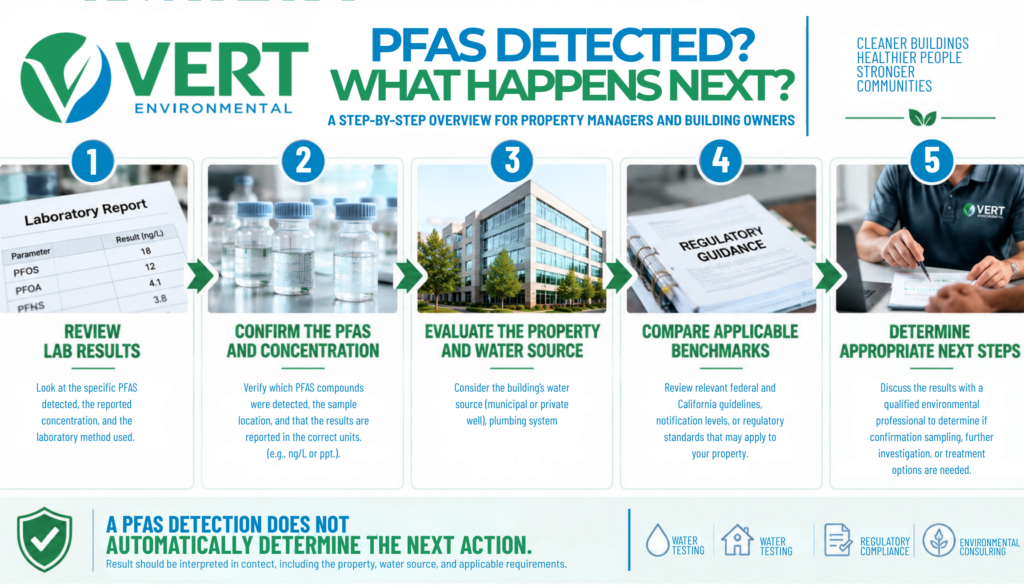
A PFAS detection does not automatically tell you what action should occur next. The result should first be reviewed in context, including:
- The specific PFAS detected
- The reported concentration
- The sample location
- The laboratory method used
- The property’s water source
- Applicable federal or California benchmarks
Depending on the circumstances, next steps may include confirmation sampling, coordination with the water provider, consultation with the appropriate regulatory agency, additional investigation, or evaluation of treatment options by a qualified water-treatment professional.
Avoid making treatment decisions from an isolated result without first confirming what the laboratory data actually means.
PFAS Requirements Are Still Developing
Property owners should expect requirements for PFAS testing in California to continue evolving. California and federal regulators continue to evaluate drinking-water monitoring and regulatory standards.
This makes documentation particularly important. Keep copies of:
- Water-quality reports
- Laboratory results
- Sampling locations
- Chain-of-custody records
- Communications from the water provider
- Regulatory notices
- Follow-up testing or recommendations
A clear record makes it easier to respond if regulations, property ownership, or tenant questions change later.
What Property Managers and Building Owners Should Do Before 2027
You do not need to test blindly. Start by identifying your property’s water source and determining who is responsible for regulatory monitoring. Then review available PFAS information from the water provider.
Before ordering PFAS testing in California, property managers should review the property’s water source, available PFAS data, and existing monitoring responsibilities.
If your property uses a private well, operates its own regulated water system, has a known site-specific concern, or needs independent documentation, discuss an appropriate testing plan with an environmental testing professional.
The objective is not simply to produce a laboratory number. It is to obtain defensible information that helps you understand what is actually happening at the property.
Get Clear Answers About Your Property’s Water Quality
Preparing now for PFAS testing in California can help property managers and building owners make informed decisions before new requirements take effect.
VERT Environmental provides independent water quality testing and other environmental testing services for California property managers, building owners, contractors, businesses, and homeowners.
If PFAS or another water-quality concern is affecting your property, professional sampling can help establish reliable data before decisions are made.
Request a quote from VERT Environmental to discuss your property’s water-quality testing needs.
This article is intended for general informational purposes and does not constitute legal or regulatory advice. Testing and compliance requirements can vary based on the property, water system classification, location, and scope of work.

Related Articles

Your Home Didn’t Burn. Can Wildfire Smoke Still Contaminate It?
Private Well Water Testing in California: What Should Homeowners Test For?