Your Home Didn’t Burn. Can Wildfire Smoke Still Contaminate It?
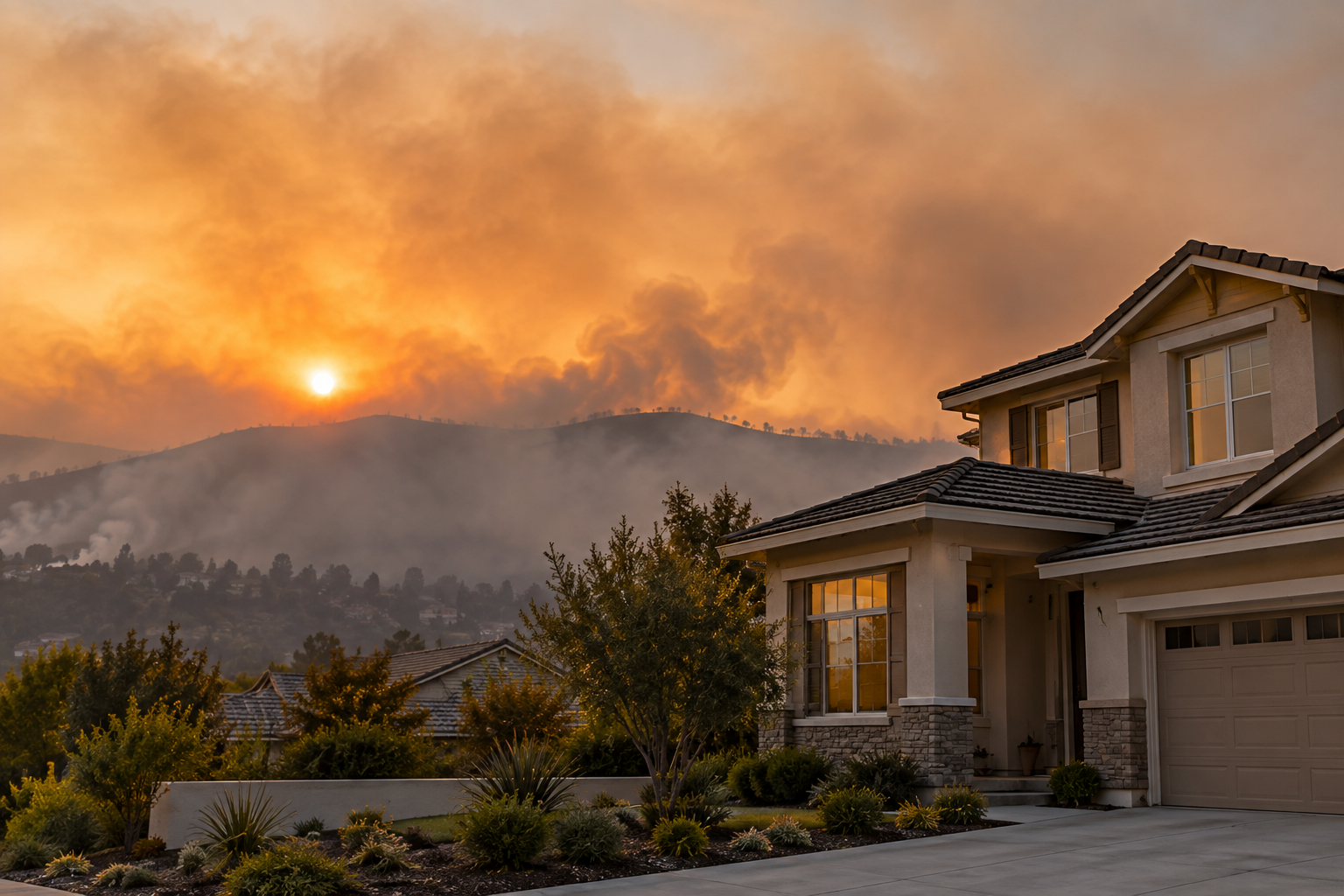
The fire stopped miles away, or a few streets over. Your house is standing. But days later it still smells like smoke, there’s gray dust on the windowsills, and the HVAC filter looks like charcoal.
Yes: wildfire smoke and ash can get into a home that never saw a flame. The question isn’t “did my house burn?” It’s “what got inside while the fire was burning, and does it need more than a good cleaning?”
Quick answer: can wildfire smoke contaminate a house that didn’t burn?
Smoke and fine particles enter homes through doors, windows, gaps and HVAC systems, even with everything closed. Ash from nearby burned buildings can blow in or get tracked inside. Light smoke with no visible soot or ash can usually be handled with careful cleaning and filtration. Visible soot or ash, a smoke smell that won’t go away, or burned homes nearby are reasons to get a professional assessment.
How does smoke get into a closed house?
- Gaps around doors and windows. Most homes aren’t airtight.
- HVAC and ventilation. Systems that bring in outside air, plus kitchen and bath exhaust fans, move smoky air indoors. EPA recommends recirculate mode and a MERV 13 filter (or the best your system can handle) during smoke events.
- People and pets. Ash rides in on shoes, clothes and fur.
- Open doors. Even brief trips in and out during heavy smoke add up.
Smoke, soot and ash aren’t the same thing
- Smoke: airborne particles and gases. The fine particles (PM2.5) are small enough to travel deep into the lungs, and the smoke itself can travel hundreds of miles.
- Soot: dark, oily, carbon-rich residue that settles and smears.
- Ash: the larger leftover particles. Ash from burned homes and cars is different from fireplace ash: CDPH notes it can contain metals such as lead and arsenic, asbestos, and chemicals from plastics and paint.
That last point is why distance matters: a home next to burned structures faces a different risk than one that sat under regional haze. If ash also landed in your yard or garden, see our guide to wildfire ash testing in California.
What are the signs smoke got into my home?
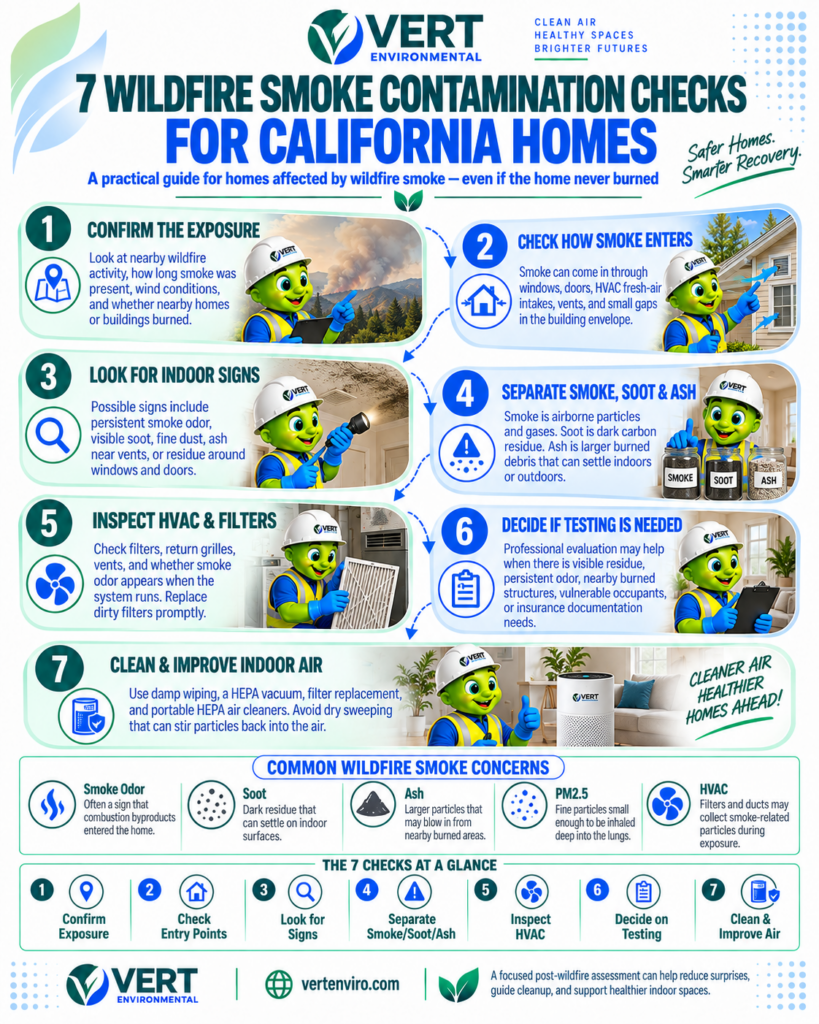
- A smoke smell that comes back, especially when the HVAC runs
- Fine gray or black dust on sills, counters and less-used surfaces
- Dark residue around windows, doors or air vents
- A badly discolored HVAC filter
- Ash on patios, cars and outdoor furniture
Simple check: a damp white cloth can help identify visible residue on a wall or windowsill. However, a clean wipe does not rule out fine particles, gases, or contamination elsewhere in the home. Treat it as an initial observation, not confirmation that the home is safe. Los Angeles County’s returning-after-a-fire guidance explains more.
Should I clean it myself or call a professional?
| What you’re seeing | Likely next step |
|---|---|
| Light haze, faint smell that fades, no visible residue on a wipe | Clean and filter: wet wipe, HEPA vacuum, new HVAC filter, portable HEPA air cleaner |
| Visible ash or soot indoors | Professional assessment before or alongside cleanup |
| Smoke smell still there after cleaning | Professional assessment, including the HVAC |
| Homes, garages or cars burned nearby | Professional assessment; ash may carry metals or asbestos |
| Insurance claim, or a restoration company proposing major work | Independent assessment and documentation before cleanup |
| Infants, elderly or medically vulnerable people in the home | Lean toward a professional assessment |
How do I clean up wildfire ash safely?
For light ash deposits on an otherwise undamaged property, damp cleaning and HEPA vacuuming can help reduce dust. Substantial ash deposits or suspected asbestos-containing debris need professional guidance before cleanup. An N95 does not make hazardous-material removal safe.
For light ash, CDPH recommends wet methods and HEPA filtration:
- Damp-wipe surfaces and wet-mop floors; don’t dry sweep
- Use a HEPA-filter vacuum, not a regular or shop vacuum
- Run a portable HEPA air cleaner sized for the room
- Wear an N95 respirator, gloves and long sleeves during cleanup
- Leave shoes at the door
Remember: a properly sized HEPA air cleaner reduces airborne smoke particles. HEPA filtration alone does not remove gases or vapors, and it cannot remove soot or ash already settled on surfaces. That’s what cleaning is for; you may need both.
What about the HVAC and air ducts?
Replace the filter, check the supply and return registers, and notice whether the smoke smell gets stronger when the system runs. EPA doesn’t recommend duct cleaning as routine; its guide Should You Have the Air Ducts in Your Home Cleaned? suggests considering it when there’s heavy dust or debris in the ducts or particles are blowing out of the registers.
Should I test before or after cleaning?
If you need documentation for an insurance claim or a remediation scope, have the home assessed before major cleanup; cleaning can remove the evidence. California’s new smoke damage rules also changed what insurers must do. See what AB 1795 means for your claim.
If there’s only light dust and no claim, careful cleaning usually comes first.
What does a Vert smoke assessment look at?
There’s no single lab test that declares a house “safe.” Los Angeles County notes that lab results have to be read alongside conditions at the property. So we start with the question you need answered, then choose the method:
- Visual inspection of surfaces, sills, registers, filters and the attic
- Surface sampling for soot, char and ash when residue is present
- Indoor particle readings when indoor air quality is the concern
- Targeted lab analysis (for example, metals) when burned structures were nearby
- A clear report you can share with your insurer or restoration contractor
Learn more about our smoke and fire residue testing.
Frequently asked questions
Can wildfire smoke contaminate a house that didn’t burn?
Yes. Smoke, soot and ash can enter through gaps, doors and HVAC systems and settle inside, even when the house has no fire damage.
Is wildfire ash toxic?
Ash from burned buildings and vehicles can contain metals, asbestos and chemicals. For light ash deposits on an otherwise undamaged property, damp cleaning and HEPA vacuuming can help reduce dust. Substantial ash deposits or suspected asbestos-containing debris need professional guidance before cleanup. An N95 does not make hazardous-material removal safe.
Do I need to clean my air ducts after a wildfire?
Not automatically. Consider it if ducts hold heavy debris or particles blow out of the vents.
Can a HEPA air purifier remove wildfire smoke?
A properly sized HEPA air cleaner reduces airborne smoke particles. HEPA filtration alone does not remove gases or vapors, and it cannot remove soot or ash already settled on surfaces.
Should I test my house after a wildfire?
If you see soot or ash indoors, the smell won’t clear, structures burned nearby, or you need documentation for insurance, yes.
How far does wildfire smoke travel?
Hundreds of miles. Heavy ash deposits, though, are mostly a concern close to the burn area.
Still smell smoke? Get answers before you spend on cleanup.
Vert Environmental assesses smoke, soot and ash in homes across Southern California and the Bay Area, with independent results you can take to your insurer or contractor.

Related Articles

Private Well Water Testing in California: What Should Homeowners Test For?
Environmental Testing Before Remodeling California Homes: A Pre-Renovation Guide