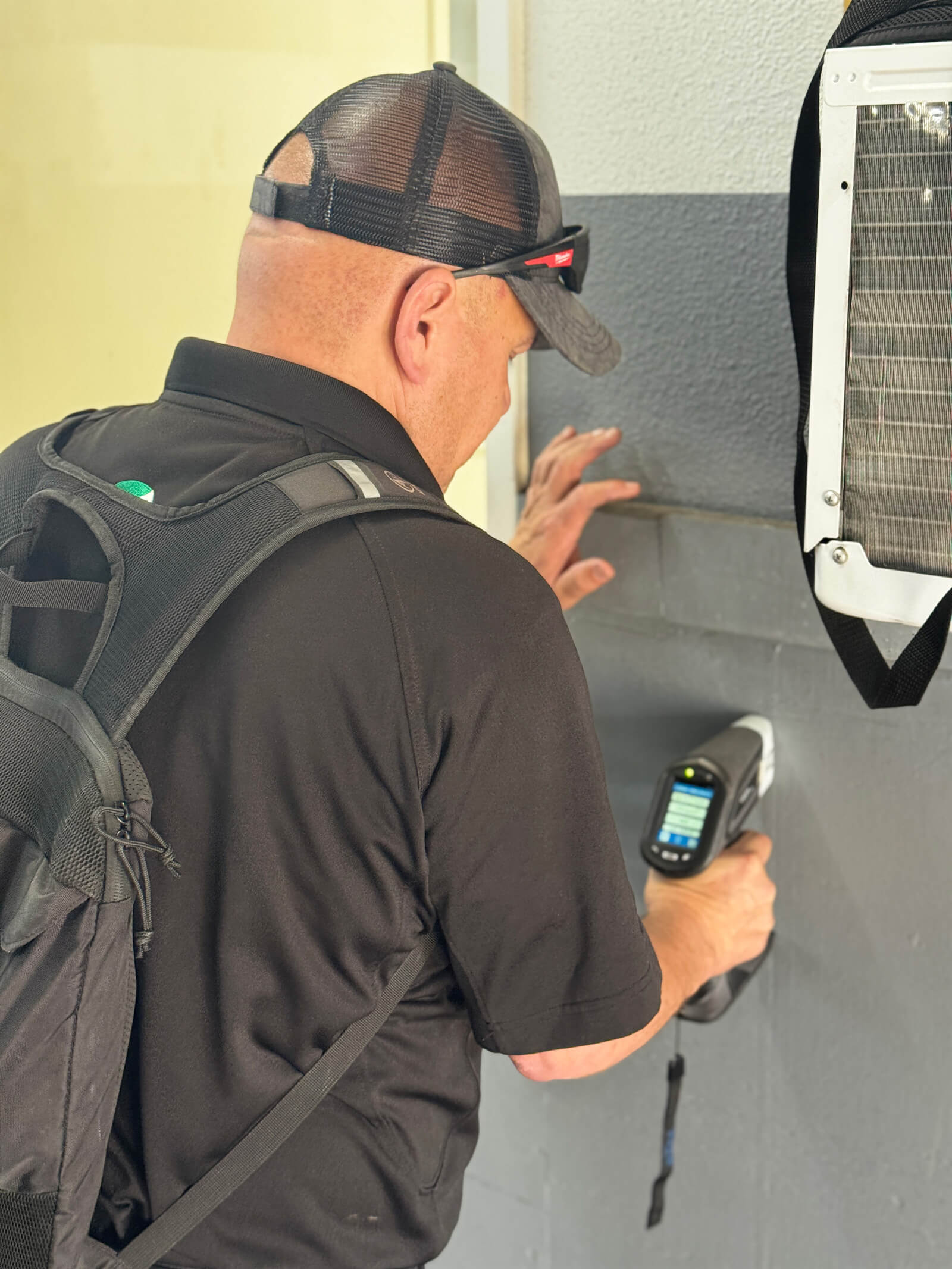
Sewage Backup After Heavy Rain: When Testing Matters
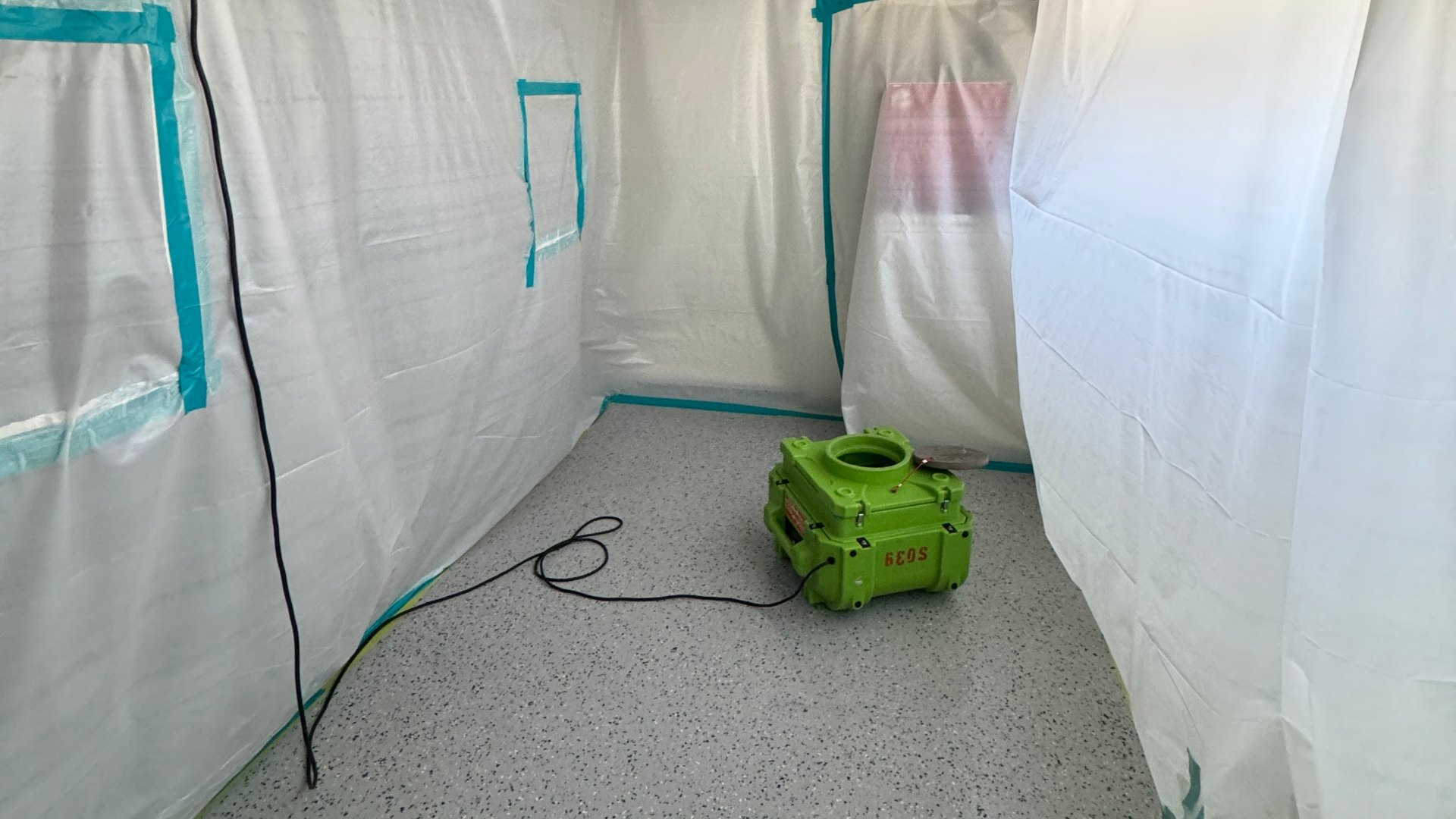
Heavy rain doesn’t only come in through the roof. When storm water overloads sewer lines, it can push wastewater back up through floor drains, toilets and showers, often in the lowest part of the home. A sewage backup is a different situation from a clean pipe leak, and it calls for a different plan.
Why is a sewage backup different from a regular leak?
Water from a clean supply line is one thing. Sewage carries bacteria and other contaminants, so anything it touches needs more than drying. The water damage industry calls this “Category 3” water, the most contaminated type. Our guide to water damage categories explains the difference.
What should I do first?
- Keep children and pets out of the affected area until cleanup is done.
- Stop using sinks, toilets and showers that drain to the same line, and call a plumber or your local sewer agency.
- Turn off power to the area if water is near outlets or appliances, and only if it’s safe to reach the panel.
- Take photos and video for insurance before anything is moved.
- Call a professional water damage restoration company for cleanup. Sewage cleanup is not a typical DIY job.
If you do enter the area, wear rubber boots, waterproof gloves and eye protection.
What usually has to go?
Health agencies generally recommend throwing out porous items that can’t be washed and disinfected. The New York State Department of Health lists carpet, padding and rugs, upholstered furniture, mattresses, and wallboard and insulation that were underwater.
Hard, non-porous surfaces can usually be cleaned and disinfected. Your restoration contractor will tell you what can be saved.
Why drying matters after cleanup
After cleanup and removal of affected materials, the area still has to dry completely. EPA advises drying wet materials within 24 to 48 hours to help prevent mold growth. Water can wick into walls and under flooring, so wet areas aren’t always visible.
When does testing help after a sewage backup?
Testing doesn’t replace professional cleanup. It helps verify the cleanup worked and gives you documentation. It helps most when:
- You want to help verify surfaces are clean before your family moves back into the space
- Children, older adults or someone with health concerns use the area
- You’re a landlord or property manager and need a record for tenants
- An insurance claim calls for independent documentation
- Walls or floors are about to be closed up and you want to know they’re dry
- A musty smell shows up weeks later
What testing can include:
- On-site ATP screening of cleaned surfaces. The reading measures ATP from organic residue, so a high number shows a surface needs more cleaning
- Moisture mapping to help confirm walls and floors are dry before rebuilding
- Mold assessment if odor or staining appears later
Why independent testing?
Vert Environmental only tests; we don’t do cleanup or remediation. That means our results aren’t tied to selling you more work, and you get a clear report you can share with your contractor, landlord or insurer.
FAQ
Is it safe to stay in the house after a sewage backup?
It depends on where the backup happened and how much area it affected. Keep everyone out of the affected area until it has been professionally cleaned.
Can I clean up a small sewage backup myself?
For anything beyond a very small, contained spill on a hard floor, professional cleanup is the safer choice.
Do I need to throw out my carpet?
Health agencies generally recommend discarding carpet and padding soaked by sewage.
Does insurance cover sewage backup?
It depends on your policy; many policies treat sewer backup separately. Check your policy and talk to your insurer.
How do I know the cleanup worked?
Post-cleanup testing and moisture readings can help verify the cleanup worked and materials are dry before you rebuild.
Help verify it’s clean before you rebuild
Vert Environmental’s certified team tests surfaces and maps moisture after a sewage backup, to help verify it’s clean and dry before you close walls or move back in. Serving Southern California and the Bay Area. Same-day testing is available, and we send a proposal within 24 hours of the job walk.
Call us: San Diego (858) 433-3290 · Orange County (714) 515-5095 · Bay Area (415) 857-9443
Related reading: Understanding Water Damage Categories · After the Storm: Hidden Leaks to Mold · Moisture Mapping · Property Manager Water-Damage Checklist

Related Articles

Asbestos in Popcorn Ceilings: Test Before You Scrape
After the Storm: How to Find Hidden Leaks Before They Turn Into Mold