The Property Manager’s Water-Damage Checklist: What to Do in the First 48 Hours
The call usually comes at the worst time. A tenant reports water under the kitchen sink, a brown stain spreading across a ceiling, or a unit that took on water in last night’s storm. You have to protect the tenant, the building and the owner, all at once, and the clock is already running.
Water that sits is what turns a repair into a mold problem. EPA advises drying wet materials within 24 to 48 hours to prevent mold growth. This checklist walks you through the first hour, the first two days, and when testing actually helps.
Quick answer: the first 5 things to do when a tenant reports water damage
- Stop the water, or get someone on site who can.
- Make the area safe: electricity, slip hazards, ceiling sag.
- Photograph and video everything before anything is moved.
- Notify the owner and the insurance carrier.
- Start drying within 24 hours, and check for hidden moisture.
The first hour: stop, secure, document
- Stop the source. Shut off the fixture valve or the unit’s main water supply. For roof or window leaks, tarp or contain and call your roofer.
- Safety first. If water is near outlets, panels or light fixtures, shut off power to the area and keep people out. A sagging ceiling can hold a lot of water; keep tenants clear.
- Document before cleanup. Photos and video of the source, wet areas, damaged belongings and water lines on walls. Note the date and time the tenant reported it.
- Notify. Owner, insurance carrier, and any affected neighboring units. Water moves sideways and down; check the unit below.
- Talk to the tenant. Tell them what happens next and when someone will be back, and follow up in writing.
The first 24 to 48 hours: dry it and find where the water went
- Remove standing water and start drying. Fans, dehumidifiers and, for anything larger than a small spill, a water damage restoration company.
- Know what kind of water it is. Clean water from a supply line is handled very differently from water that touched sewage or came in from outside. Learn more about water damage categories.
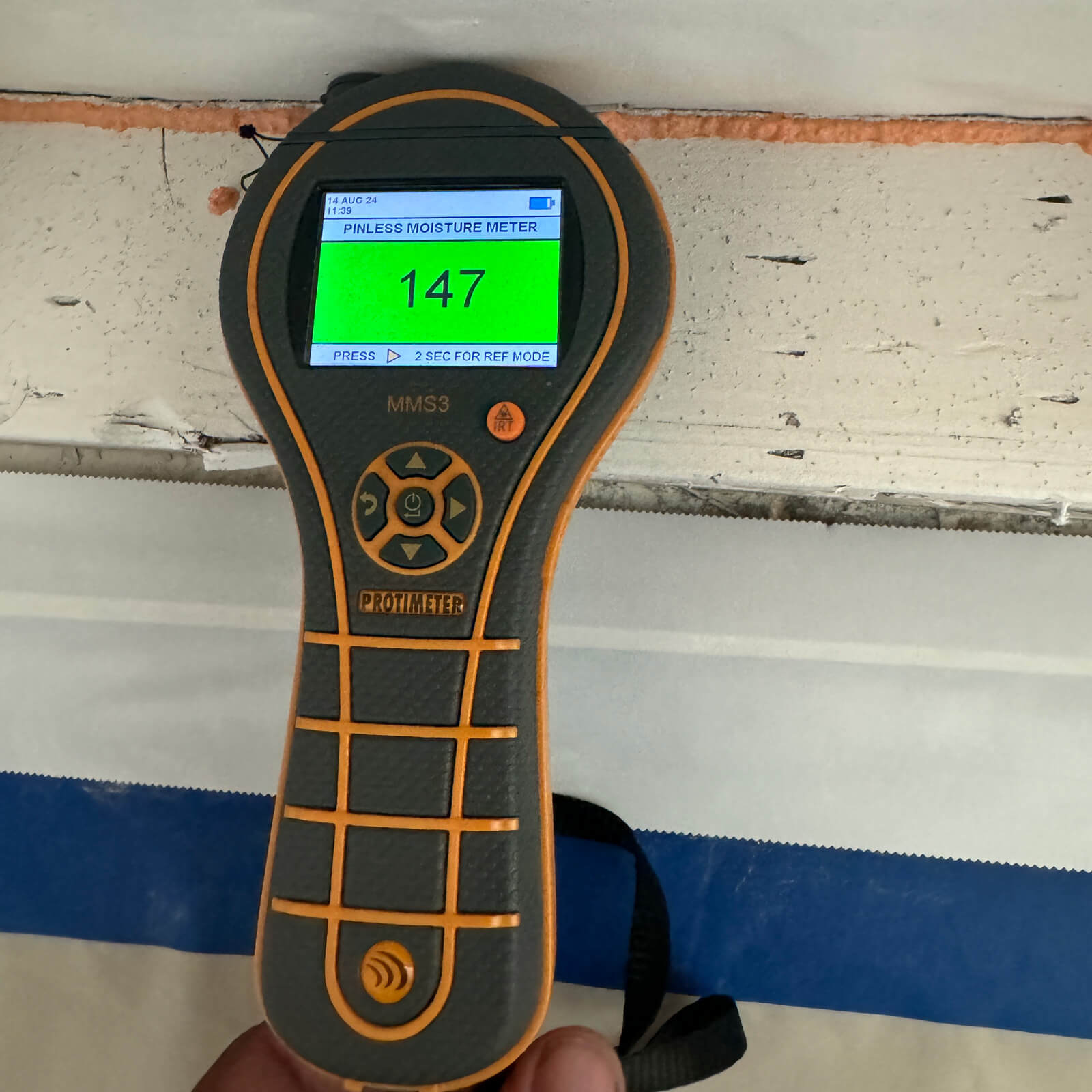
- Find the hidden moisture. Water travels inside walls, under flooring and into the unit below. What you can see is usually less than what got wet. Moisture mapping helps identify elevated moisture in accessible areas and guide further investigation, so drying and repairs target the right areas.
- Decide what stays and what goes. Some materials dry out; others, like saturated drywall, insulation and carpet pad, often need to come out. Your restoration contractor makes that call; independent moisture readings help you check their scope.
When should you test for mold or moisture?
You don’t need a mold test every time a pipe leaks. If mold is already visible, EPA says sampling is usually unnecessary, and the first step is to fix the moisture and clean up.
Testing or a professional inspection makes sense when:
- Materials stayed wet longer than about 48 hours
- The water was from a sewage backup or came in from outside
- A tenant reports a musty smell but no one can find the source
- Stains keep coming back after repairs
- You need to know how far water spread into walls or other units
- A tenant has raised health concerns, or you expect a dispute
- The owner or insurer wants independent documentation
- You want proof the area is dry and clean before you close walls or re-rent
A typical inspection starts with the history of the leak, then a visual check and moisture readings; samples are collected only when they’ll answer a real question. See our mold testing services.
Older buildings: check before you cut
In many older buildings, drywall, joint compound, flooring, mastic and ceiling texture can contain asbestos, and painted surfaces in pre-1978 buildings may contain lead. Before a restoration crew cuts out wet drywall or pulls up flooring, make sure those materials have been checked. In Southern California, air district rules generally require an asbestos survey before renovation work on multi-unit buildings. Read more about testing before remodeling and asbestos testing.
Tenant communication: keep it fast and in writing
- Acknowledge the report the same day.
- Explain what you’re doing and when each step happens.
- Give advance notice before entering the unit, as California law requires.
- Share results when testing is done.
- Keep a log: dates, calls, visits, photos, reports.
California treats visible mold and water intrusion as habitability issues. Quick, documented action protects your tenants and the owner.
Insurance and documentation: what adjusters ask for
- Date and time the leak was reported and stopped
- Photos and video before cleanup
- The cause (burst line, appliance, roof, storm)
- Moisture readings and a drying log
- Restoration invoices and the scope of work
- Independent test results, if testing was done
An independent environmental report is separate from the restoration company’s own readings. It gives the owner and the insurer an unbiased record of conditions before and after the work.
After the repair: confirm before you close up
Before walls are closed or a unit is re-rented, confirm materials are dry. If there was mold or a Category 3 loss, a post-remediation clearance test by a third-party testing firm confirms the cleanup worked. It’s also the documentation you’ll want if questions come up later.
Printable checklist
First hour
- Water source stopped
- Power off and area secured
- Photos and video taken, report time noted
- Owner, insurer and neighbors notified
- Tenant updated in writing
First 24 to 48 hours
- Standing water removed, drying started
- Water type identified
- Hidden moisture checked (walls, floors, unit below)
- Older building: asbestos and lead checked before demolition
- Restoration scope reviewed
Before closing up
- Materials confirmed dry
- Mold testing or clearance if needed
- Reports and log saved to the unit file
FAQ
How fast does mold grow after a leak?
EPA advises drying wet materials within 24 to 48 hours to prevent mold growth.
Do I have to test for mold after every leak?
No. Testing helps when water sat for more than about 48 hours, the source can’t be found, the water was contaminated, or you need documentation.
Who pays for mold testing in a rental?
It depends on the lease, the cause and your insurance.
Can the restoration company do the testing?
They can take readings, but an independent environmental consultant avoids any conflict of interest, especially when the same company would do the remediation.
What if the tenant refuses entry?
Document your notices and attempts, and follow California’s entry rules.
Water in a unit right now?
Vert Environmental helps property managers across Southern California and the Bay Area find hidden moisture, test for mold and document conditions for owners and insurers. Same-day testing is available, and we send a proposal within 24 hours of the job walk.

Related Articles

After the Storm: How to Find Hidden Leaks Before They Turn Into Mold
Lead Paint Testing Before Remodeling: What Pre-1979 California Homeowners Need to Know