Private Well Water Testing in California: What Should Homeowners Test For?
If your water comes from a private well, no utility is testing it for you. City water systems have to monitor and report on what comes out of the tap. Most private domestic wells don’t, so it’s up to the owner to know what’s in the water.
Clear, good-tasting water can still carry bacteria, nitrate or arsenic. You can’t see, smell or taste most of them. A lab test is the only way to know.
Quick answer: what should I test my well water for?
EPA recommends testing a private well every year for total coliform bacteria, nitrate, total dissolved solids (TDS) and pH. Then add tests based on where you live: arsenic and uranium in some areas, pesticides near farms, solvents or fuel compounds near industrial sites. See EPA’s private well guidance.
Which tests does my well need?
| Test | How often | Why |
|---|---|---|
| Total coliform bacteria (and E. coli if positive) | Every year | Can indicate that contamination is entering the water system |
| Nitrate | Every year | From fertilizer, septic systems and animal waste; especially important if water is used for infant formula |
| TDS and pH | Every year | General water quality; changes can signal a problem |
| Arsenic, uranium | At least once, then as advised | Occur naturally in some California rock and soil |
| Pesticides | If near farms, orchards or nurseries | Depends on local land use |
| Solvents and fuel compounds (VOCs, MTBE) | If near industrial sites, dry cleaners or fuel stations | Depends on nearby sources |
| PFAS, chromium-6, 1,2,3-TCP, perchlorate | If local groundwater data shows them | Known in parts of the state; check before ordering a big panel |
A targeted panel based on your location beats the biggest panel available. California’s GAMA groundwater program and your county environmental health department can show what’s been found in groundwater near you. Concerned about PFAS? Read PFAS testing in California.
When should I test my well right away?
Don’t wait for the annual test when something changes:
- The water’s color, taste or smell changes
- The well flooded or surface water reached it
- The pump, casing or well was repaired or replaced
- A nearby septic system failed, or there’s new construction close to the well
- A wildfire burned in the watershed
- Someone in the home is pregnant, or an infant will drink the water
- Neighbors have found contamination in their wells
Buying a home with a well?
Make the water test part of your due diligence, before escrow closes. Ask the seller for past results, then test for bacteria, nitrate and anything relevant to the area. A clean-looking glass of water tells you nothing about arsenic or nitrate.
Renting out a property with a well? (AB 2454)
California’s AB 2454 applies to owners of domestic wells that supply rental properties when the well is inside the area of a free state- or regional-board testing program. Covered owners must take part in the program, share results with tenants within 10 days, and can’t charge tenants for testing. If results exceed drinking water standards and the program offers free replacement water, owners must provide safe drinking water. Check the State Water Board’s domestic well testing page to see whether your county is covered.
Should I use a home test kit or a lab?
Home kits can flag that something may be present. An accredited laboratory uses appropriate methods to test for specific contaminants. Results may report a concentration or whether a contaminant is present or absent. For results you can compare against drinking water standards, use a lab accredited by California’s Environmental Laboratory Accreditation Program (ELAP). How the sample is collected (bottle, preservative, holding time) matters as much as the lab.
My well failed a test. Now what?
- Stop drinking and cooking with it if bacteria or a health-based standard was exceeded; use bottled water short term.
- Confirm the result with a retest if advised.
- Find the source: well seal, casing, septic, runoff, nearby land use.
- Choose treatment for that contaminant. No single filter removes everything.
- Retest after repairs or treatment.
Your county environmental health department can also advise. The state recommends private well owners use public drinking water limits (MCLs) as a benchmark, even though they’re not legally required for most private wells.
Well owner checklist
- Has the well been tested in the last 12 months?
- Did the test include coliform bacteria and nitrate?
- Has it ever been tested for arsenic?
- Is the home near farms, industry, fuel storage or a septic system?
- Has the well flooded or been repaired recently?
- Has the water’s taste, smell or color changed?
- Will an infant or pregnant person drink the water?
- Is the property a rental?
Frequently asked questions
How often should I test my private well in California?
At least once a year for bacteria, nitrate, TDS and pH, plus right away after flooding, repairs or any change in the water.
What is the most important well water test?
Total coliform bacteria and nitrate are the baseline. Add others based on your location.
Can well water look clean and still be contaminated?
Yes. Nitrate and arsenic have no color, taste or smell.
Do I need to test well water when buying a house?
It’s strongly recommended before escrow closes, along with reviewing past results.
Are private wells regulated in California?
Most owner-occupied domestic wells aren’t regulated like public water systems. AB 2454 adds requirements for some wells serving rentals. Local rules can also apply.
Who can test private well water?
A qualified sampling professional and an ELAP-accredited laboratory.
Know what’s coming out of your tap
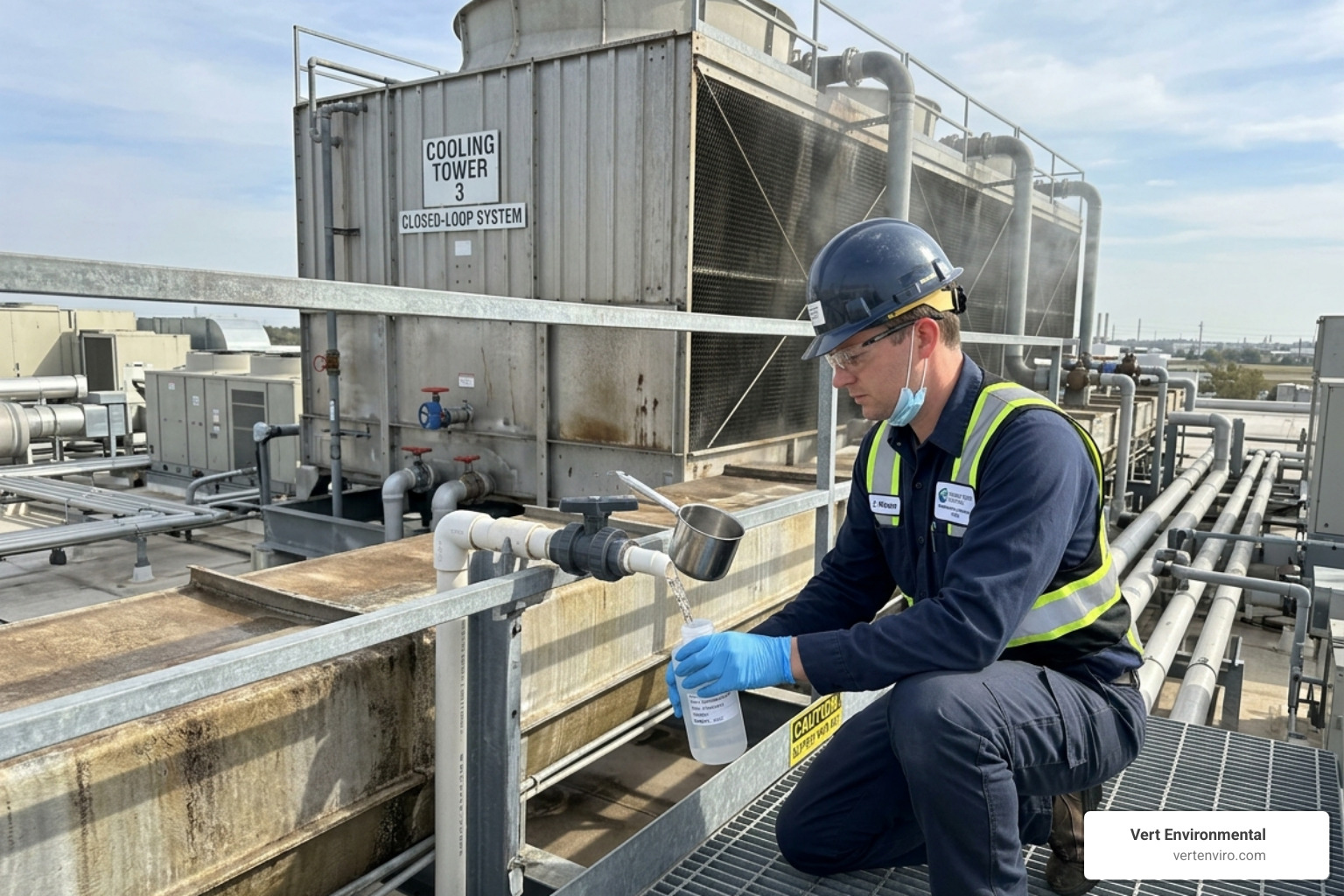
Vert Environmental collects well water samples across Southern California and the Bay Area, sends them to an accredited lab, and explains the results in plain English, including what to do next. Learn more about our water quality testing and the areas we serve.

Related Articles

Your Home Didn’t Burn. Can Wildfire Smoke Still Contaminate It?
Environmental Testing Before Remodeling California Homes: A Pre-Renovation Guide