
After the Storm: How to Find Hidden Leaks Before They Turn Into Mold
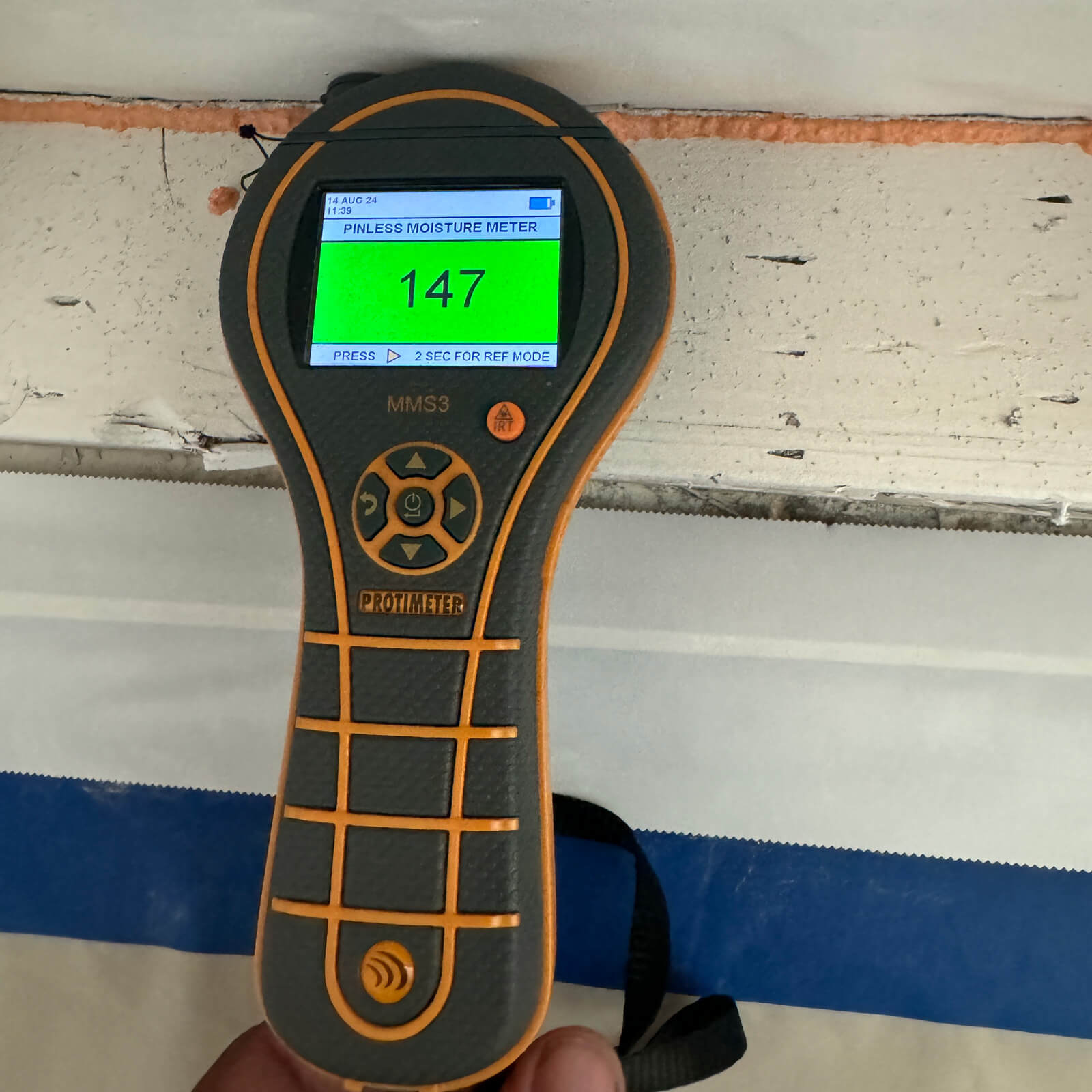
The rain stopped. The roof held, the windows look fine, and nothing is dripping. But storms don’t always leave puddles. Wind-driven rain can push water under roof flashing, around window frames and through small gaps in stucco, where it soaks into insulation, drywall and subfloors you never see.
This winter may bring more of those storms. NOAA’s October update expects a strong El Niño to continue through early 2027, which raises the chances of a wetter season in Southern California, though it isn’t guaranteed.
Hidden water is what lets mold take hold. The good news: if you find the moisture early and dry it out, you can usually stop mold before it starts.
What should I do after heavy rain?
Walk through your home within a day or two of the storm and look for the signs below. If you find wet materials, dry them quickly. EPA advises drying wet or damp materials within 24 to 48 hours to help prevent mold growth. If you smell mustiness or see a stain but can’t find where the water is coming from, that’s when a moisture inspection is worth it.
What are the signs of a hidden leak?
- New or growing water stains on ceilings or walls, often near corners, chimneys, skylights or windows
- Paint that bubbles, peels or cracks
- Baseboards, flooring or carpet that feel damp, warped or soft
- A musty or earthy smell that wasn’t there before the rain
- Dampness inside closets, cabinets or the attic
- Doors or windows that suddenly stick
The California Department of Public Health lists a musty smell and visible water damage, such as stains or discoloration on walls or ceilings, as signs of a dampness problem.
Where does storm water usually get in?
- Roof: damaged shingles, and flashing around chimneys, vents and skylights
- Windows and doors: failed seals or clogged weep holes
- Exterior walls: cracked stucco and gaps around pipes and wiring
- Foundation and slab: poor drainage that sends water toward the house
- Gutters and downspouts: overflow that soaks the wall below
Why fix the moisture first?
CDPH recommends finding and correcting the source of any water that allows mold to grow; otherwise, the mold is likely to come back. EPA also advises against painting or caulking moldy surfaces. Covering a stain hides the problem without solving it. The order matters:
- Stop the water: tarp the roof, clear the gutters, call a roofer or plumber.
- Find out how far it spread, including inside walls and under floors.
- Dry or remove wet materials as quickly as possible.
- Make repairs, then confirm the area is dry before closing walls or replacing flooring.
Do I need mold testing after a leak?
Often, no. EPA says that in most cases, if mold is visible, sampling is unnecessary. CDPH doesn’t recommend spore testing to decide whether mold or moisture needs to be fixed. Your first priority is finding and fixing the moisture.
A professional inspection helps when:
- You smell mustiness but can’t find the source
- A stain keeps coming back after repairs
- You need to know how far the water traveled before you open walls
- The affected area is large (EPA suggests homeowners can usually handle mold areas under about 10 square feet; larger areas may need a professional)
- You need documentation for an insurance claim, a landlord or a home sale
- Someone in the home has health concerns and you want an expert assessment
How does moisture mapping find what you can’t see?
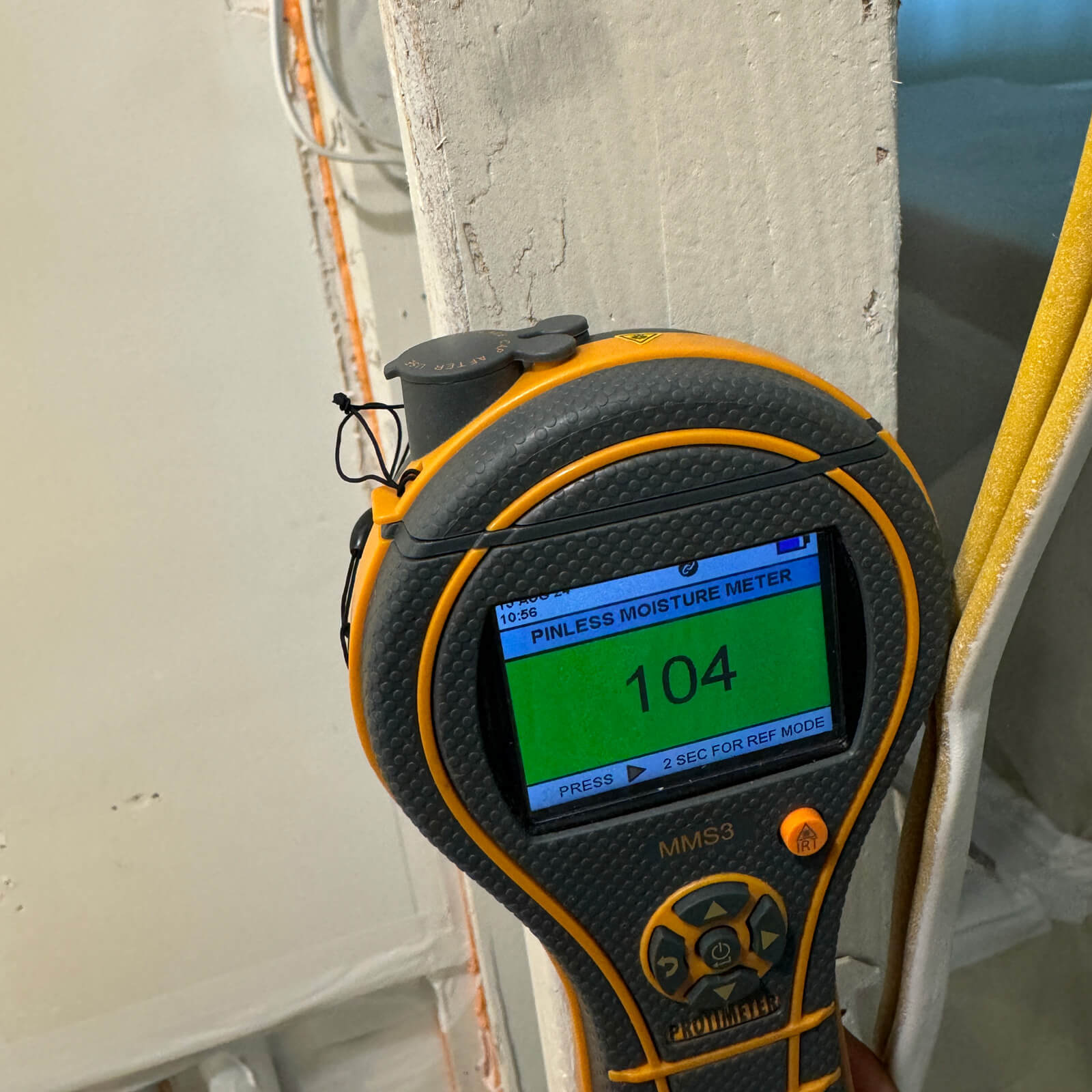
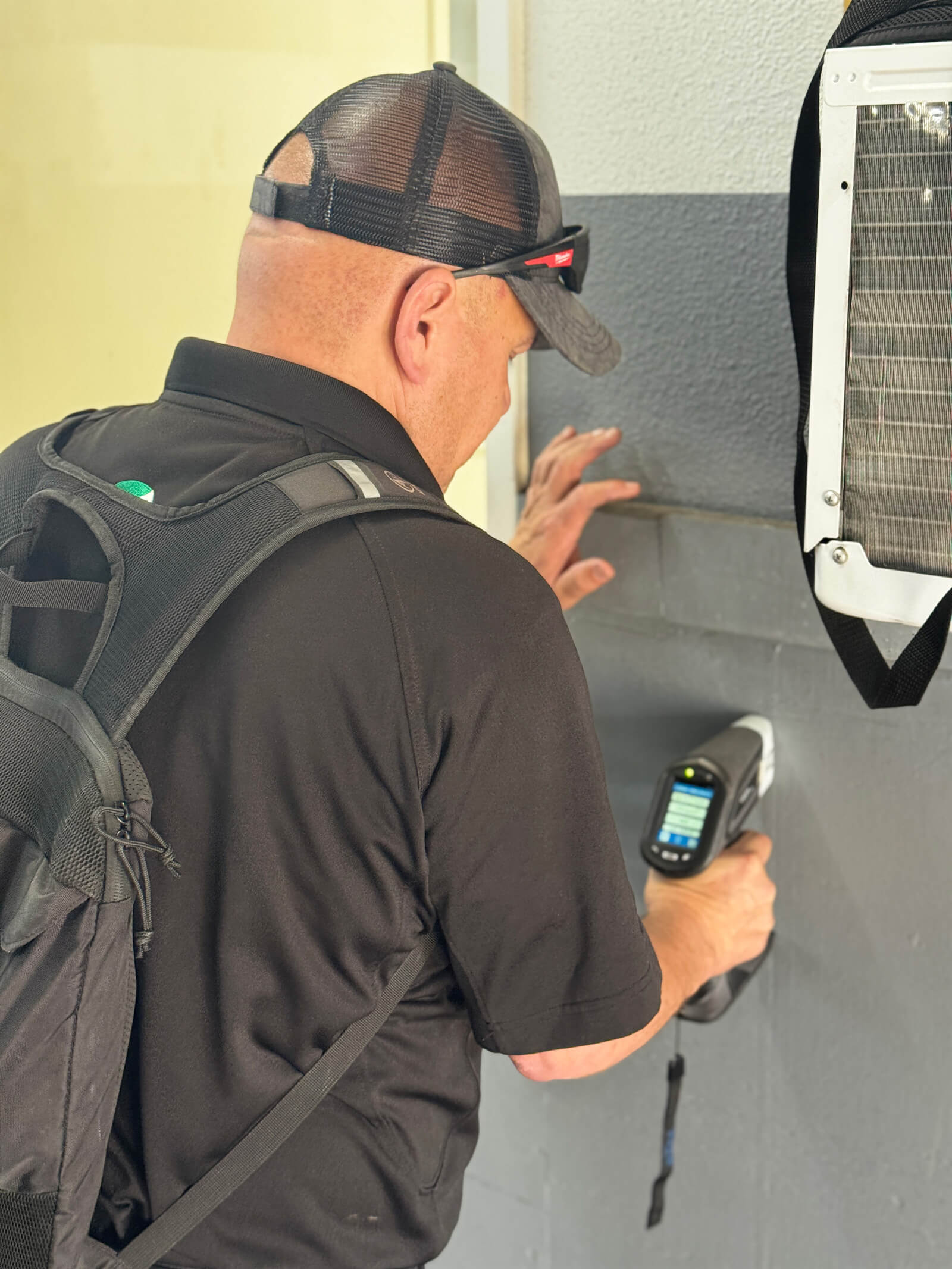
Moisture mapping uses moisture meters and thermal imaging to help locate where water is hiding behind drywall, under flooring and in ceilings, without cutting holes everywhere. Thermal imaging spots patterns that may mean moisture, and meter readings confirm it. That helps show where water went, so repairs target the right spots and you can confirm materials are dry. Learn more in The Role of Moisture Mapping in Mold Prevention and Detection.
After-the-storm checklist
- Check ceilings, walls and window frames for new stains
- Look in the attic for wet insulation or daylight through the roof
- Check closets, cabinets and baseboards along exterior walls
- Notice any new musty smell
- Clear gutters and downspouts
- Take photos of anything you find, for insurance
- Dry wet materials within 24 to 48 hours
- Can’t find the source? Book a moisture inspection
FAQ
How soon after a leak can mold grow?
EPA advises drying wet materials within 24 to 48 hours to help prevent mold growth, so act quickly after any leak.
Can I clean small mold spots myself?
EPA says most homeowners can handle areas under about 10 square feet (roughly 3 feet by 3 feet), as long as the water problem is fixed first.
Should I paint over a water stain?
Not until the leak is fixed and the area is fully dry. EPA advises against painting or caulking moldy surfaces.
Does homeowners insurance cover storm leaks?
It depends on your policy. Photos and an independent moisture report can help support a claim. Ask your insurer what they need.
Saw a stain after the storm? Find the water before it finds your walls.
Vert Environmental’s certified team uses moisture mapping and mold testing to help show where water went and what needs fixing, across Southern California and the Bay Area. Same-day testing is available, and we send a proposal within 24 hours of the job walk.
Call us: San Diego (858) 433-3290 · Orange County (714) 515-5095 · Bay Area (415) 857-9443
Related reading: Mold Prevention & Testing After Flooding · Understanding Water Damage Categories · Property Manager Water-Damage Checklist · Mold Testing

Related Articles

Lead Paint Testing Before Remodeling: What Pre-1979 California Homeowners Need to Know
The Property Manager’s Water-Damage Checklist: What to Do in the First 48 Hours